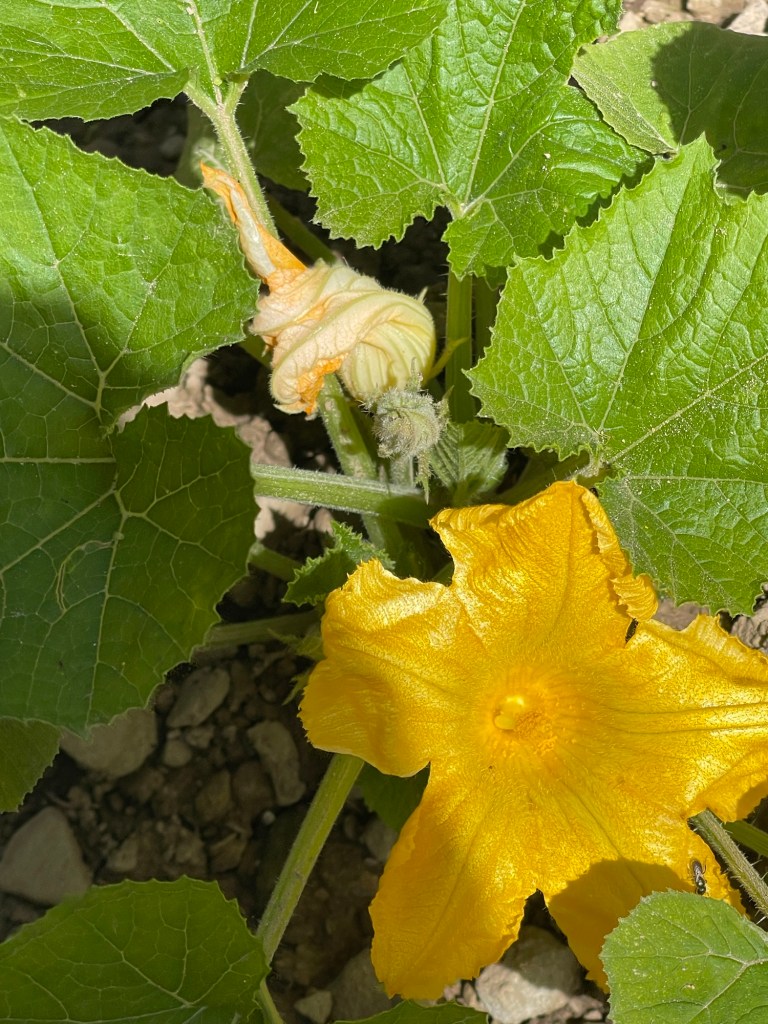
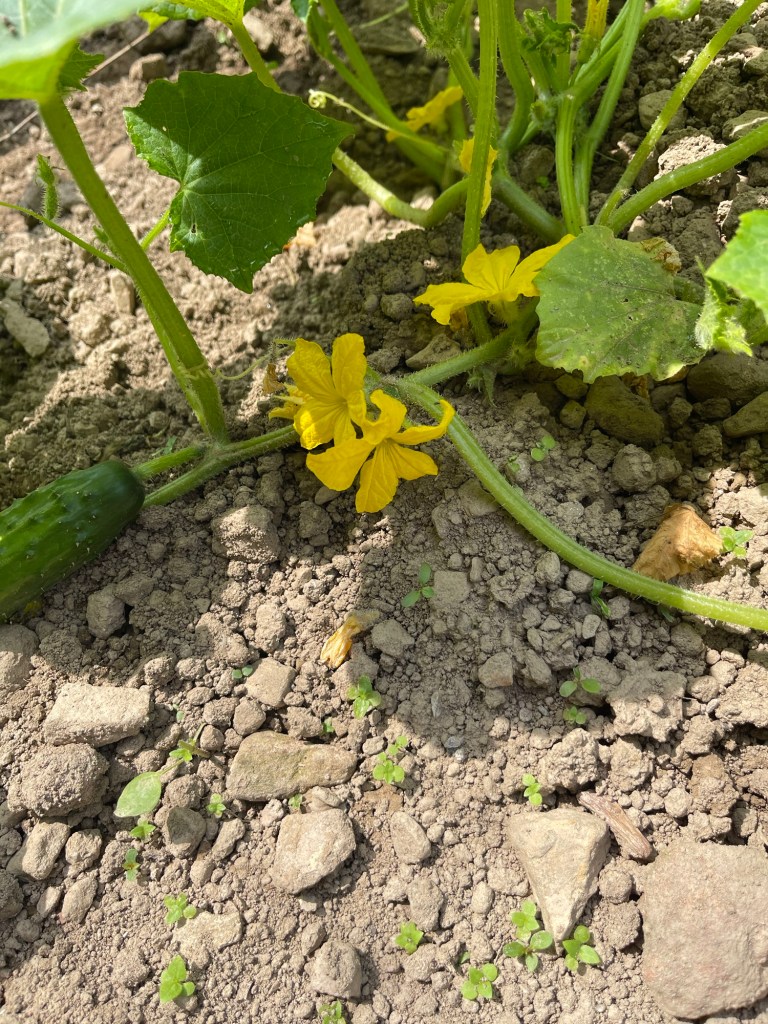
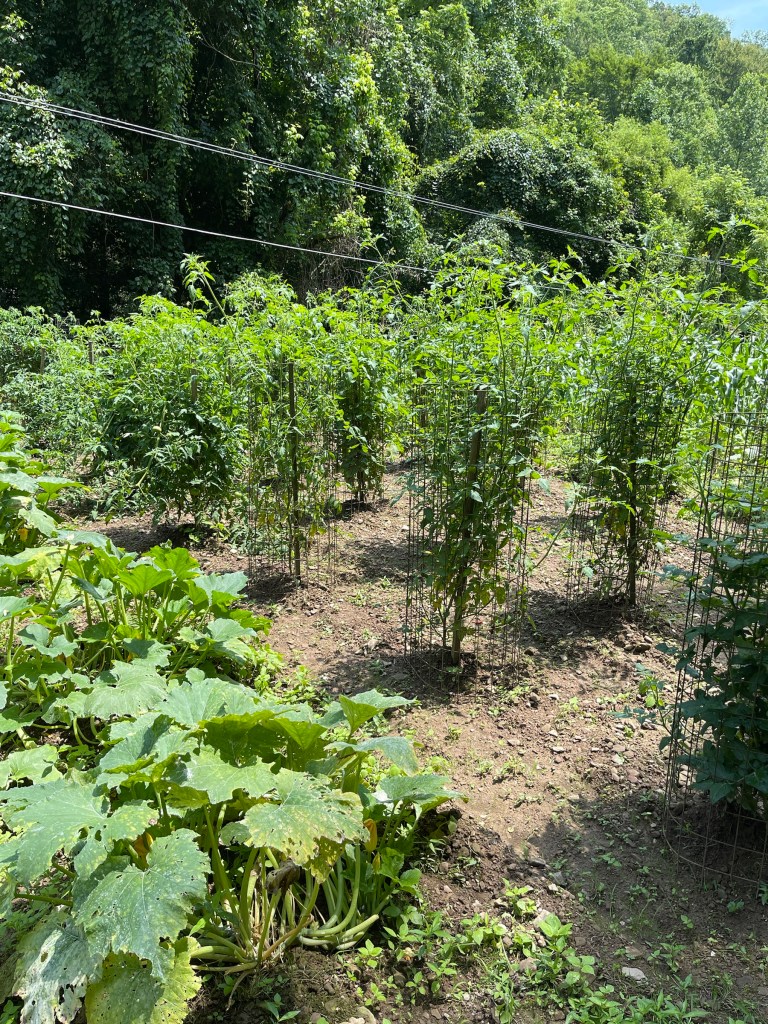
Hello from the mountains of Kentucky. I hope your week has been filled with blessings and sunshine. Life’s been busy in our neck of the woods! We finally have all our garden planted. The squash and zucchini are blooming and beginning to produce. We harvested our first two this week. The cucumber vines are running and blooming! We have our fence up and have a lot of small cucumbers on the vines. Now comes all the tilling and hoeing! But great rewards will follow!
Zucchini bloomsFirst cucumber of the season almost ready to pick!
This is the third part of my ten favorite herbs. I want to share my love and experience with chocolate mint, which is my third favorite herb post. Remember, I’m not posting in any particular order.
My chocolate mint bed.
I discovered chocolate mint about ten years ago when a friend gave me a small section she had propagated. I maintained it in a large pot in hopes it would come back the next spring. I was disappointed when it didn’t return. I could not find it at the local nurseries, so I ordered a small plant from Amazon and chose to plant it in one of my herb beds. It has thrived since then. Chocolate mint is in the peppermint family. The leaves of this wonderful mint is a deeper green than peppermint and the underside of the plant and stem is a purplish color. It is hardy in zones 3-9. The aroma is amazing!
Chocolate mint can quickly become invasive. The more it’s pruned, the thicker and bushier the plants become. If left unpruned the plants become leggy. I have had mint spring up outside the bed, in nearby pots, and even random places in the yard. If you are pruning but not harvesting, be careful with the clippings. They will sometimes take root where you discard them.
Chocolate mint makes a refreshing cold tea, by simply washing the leaves and adding them to glass of cold water. You can infuse them with an infuser or as whole leaves. It also makes excellent hot tea, especially in the winter months. Feel free to mix mints for a more bold flavor, add cinnamon for a festive tea, or just enjoy the flavor alone. It’s very refreshing.
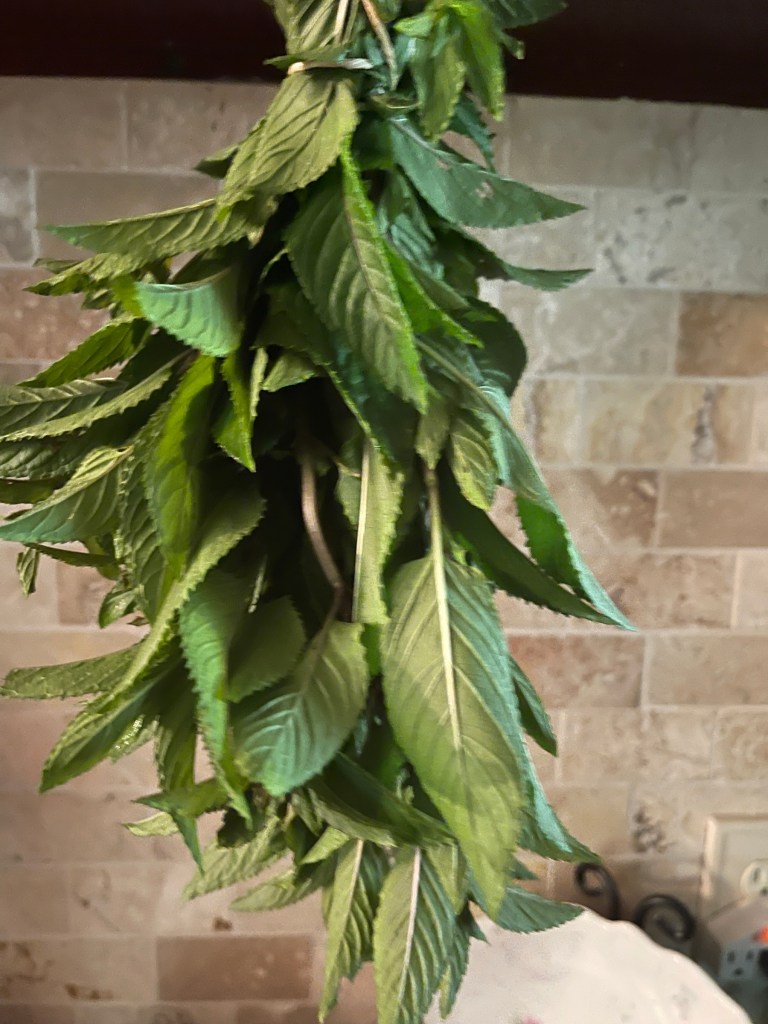
I dry my mint by clipping the plants and pruning any damaged leaves. I then wash the mint and gently pat it dry with a clean towel or unbleached paper towel. I like to hang herbs in bundles to dry. Once the mint is dry to the point of crumbling, I give it a rough grind with the mortal pestle, and add to a glass jar and place it in the cabinet away from the light. I add the dried tea leaves to a tea ball or infuser for hot and cold tea.
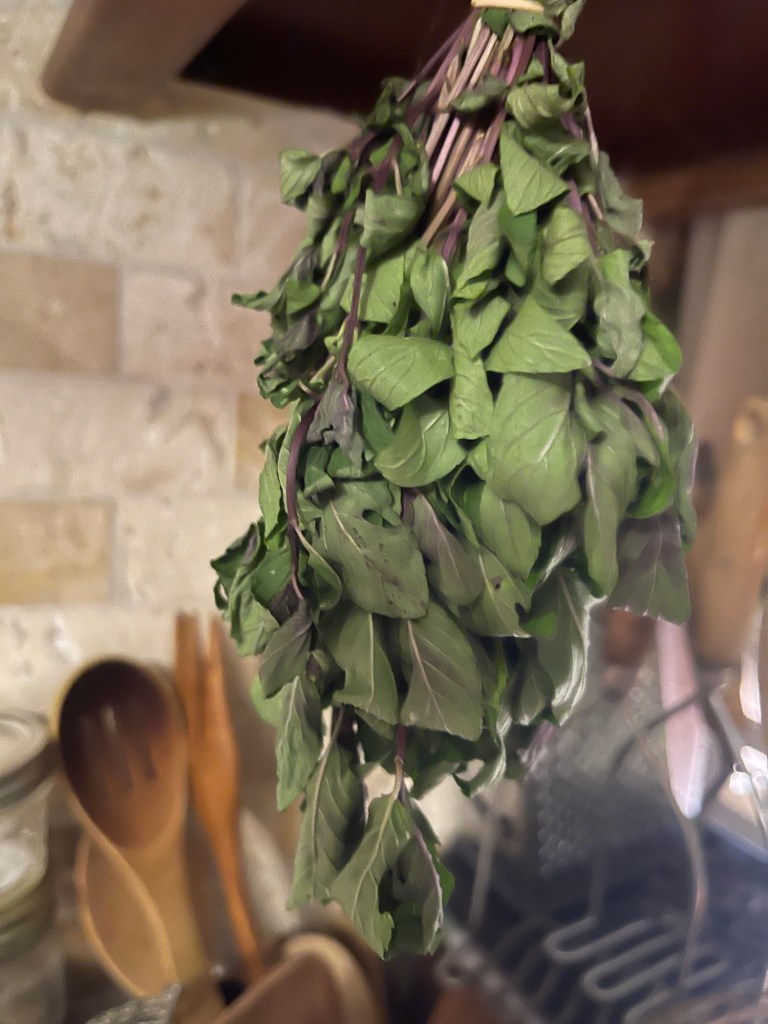
Chocolate mint drying in the kitchen.
The dried mint can also be ground in a spice grinder for a powdery type spice to use when making brownies, cakes, and as a fun additive to a cup of hot chocolate. The uses for this tasty mint are endless.
I just chocolate mint tea to help sooth an upset stomach, help digestion, and ease indigestion. It is also beneficial in soothing oral mouth pain, and to add antioxidants in my body. It and versatile herb that has been used for centuries. Chocolate mint has a multitude of benefits with great taste whether you enjoy it as a hot or cold tea, or as a spice.
I hope you’ve enjoyed this post. Feel free to ask a question, or leave a comment. You may follow my blog for more recipes, posts about mountain living, herbs, and gardening tips. Homesteading is a wonderful way of life that helps us to be independent, sustainable, and a way of life. God bless from the mountains of Kentucky.
Hello, from the mountains of Kentucky. It’s a beautiful day in the mountains today. The sky is clear, which I’m so thankful for. It’s been a very rainy May in our part of the world. Hard storms wreaked havoc on our mountains Sunday. Many are still without power, cable, telephone, and Internet. Ours was restored yesterday. One thing about loss of Internet… is it’s a great time to catch up on reading, writing, housework, and yard work. Today’s post is the second post of my top ten herbs. Keep in mind that these posts are not in any particular order. Check out my first post My Favorite Top Ten Herbs (part one – mint)
Pictured above is Italian basil
Basil is a must have for our pantry and spice cabinet. It is low maintenance, easy to grow, tastes great fresh, easy to dry for spices to use when cooking, fresh it adds wonderful flavor to dishes, makes great tortillas, makes great aioli, delicious pesto, it helps repel mosquitos, it tastes great in salads and so much more. Let’s get started!
Basil is a spicy herb that is commonly found in Italian dishes. It is actually a member of the mint family. It is a native plant of Africa and Asia. It loves plenty of sunshine, rich soil, moderate watering, and it loves to be pruned! It can tolerate some shade as well. Its wonderful taste can be identified in spaghetti sauces, pesto’s, on pizza, and in lasagna and many more delicious cuisines such as Italian tortillas. Vegan Italian Spinach Wraps. There are many types of basil. Believe it or not there are over one hundred types of basil. However, my two favorite types of basil are Genovese also known as, Italian basil it is often confused with common basil. The leaves of common basil is typically lighter than Italian basil. Another favorite of ours is lemon basil. I will address them in this post and might make a post about other types of basil at a later date.
Basil of all kinds is fairly easy to grow. It is an annual plant, which means it will need to be replanted each year if you live in a zone that has cold winters. In Kentucky, I plant basil each spring after the last frost. Don’t worry about expense. A good quality organic basil plant is only a couple of dollars. I typically purchase three to four plants per year, which is still more economical than buying fresh basil at the grocery store. One small packet of fresh basil, that may or may not be fresh, can cost nearly five dollars. I would prefer to have enough basil to enjoy fresh from spring until fall, and then harvest it for the winter.
I harvest and use it throughout the year and harvest the remaining plant before the hard frosts come to the mountains. Basil grows well in the ground, or in large pots. I prefer to plant mine in large pots within my herb garden. I also keep a pot of basil on my back porch for easy access for fresh basil. And again, it also helps deter mosquitos. Your basil will require good drainage, if you grow it in pots. I water my basil when the soil feels dry. I typically water daily when the temperatures are high. If the soil is damp, skip the watering. Over watering can be detrimental for basil. I like to add a looser potting mixture in the bottom of the pots. I enjoy caring for and growing orchids. So, I normally have an extra bag of the orchid potting mid on hand. It is a great addition to the bottom of the pot, and it helps the soil drain. I prefer to use a good quality organic potting soil for my potted herbs. If I’m going to eat them, I don’t want toxins from additives in the soil. Both lemon and Italian basil love and thrive in sunshine! I give my herbs an occasional spritz of Neem oil to prevent insects from building nests, primarily spiders, in the herbs. I also feed my herbs an occasional drink of weakened herb tea. The antioxidants are a great fertilizer. I do not add traditional fertilizer due to the additives in the fertilizer. Natural is always best!
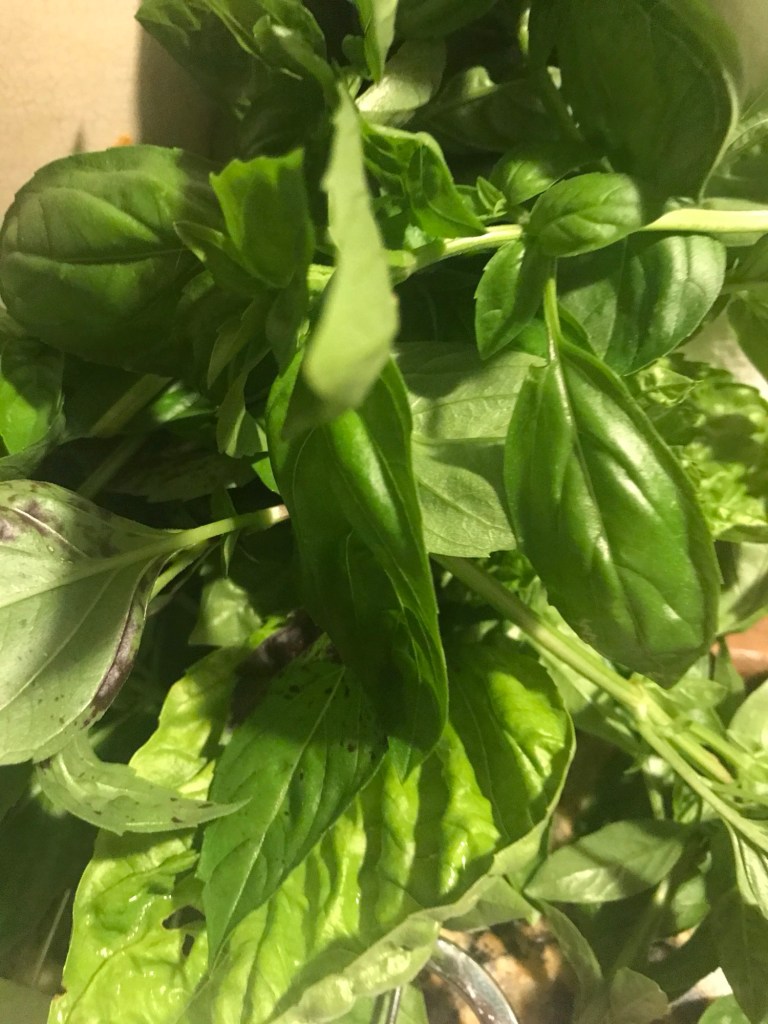
Italian basil. Close up of lemon basil.
Again, basil likes to be pruned. Trimming your basil on a regular basis allows the basil to become fuller and less leggy and promotes lots of new growth. I also keep the blooms pinched back on my basil to help promote growth and prevent a bitter taste in the herb. If you are not harvesting to eat, basil blooms a pretty white flower that is a nice addition to a flower garden. I harvest basil throughout the season by clipping stems of leaves to add to a glass of water, much like you would flowers, for fresh basil for cooking. I usually only do this if I do not want to harvest to dry but want to prune the basil. For dying, I prune the stems, rinse well, and pat dry, then pick the leaves from the stems, and allow them to air dry on cookie sheets that are lined with white or unbleached paper towels. If i want to dry the basil by hanging it, I prune the stems, rinse, pat dry, and tie small bunches of the herbs together and hang from a drying rack or hook in my kitchen. Either way that you choose to dry basil, the aroma will fill your house. Herbs can be dried in a dehydrator, the oven, or even in an air fryer. It’s quicker, but I find that it lowers the quality of taste. Air drying is my personal preference.
Basil typically takes at least two or three weeks to completely dry. Once the basil is dry, I add the whole dried leaves, which will be much smaller than fresh leaves, to a glass jar. I prefer amber jars, but clear will work. The jars are then added to a dark corner of my spice cabinet. I add the dried basil to dishes by using a mortar and pestle to grind it as I need it. I also grind some of the leaves into a finer powder using a coffee grinder. This method of storage eliminates a step in the cooking process, but still packs great flavor. The shelf life of fresh dried basil is one to two years. I usually have almost completely eliminated my dried basil from spring to spring, especially if I make many of the spinach Italian tortillas. See the link above.
A few clippings for cooking. I’ll add them to a glass of water after removing any damaged leaves.
Both Italian and lemon basil are great for pesto’s, aioli’s, makes a nice additions to salads, great on pizza, and delicious fried for a crispy bite of deliciousness for any Italian dish, or a salad topper. I also like to add fresh basil to omelets or tofu scrambles, spaghetti, and lasagna. I find that it adds an interesting taste to fresh baked bread, especially with the addition of garlic. Lemon basil is also a great addition to Asian dishes. I will try to add the recipe that is pictured below soon.
Vegetable stir fry with basil and garden veggies.
Basil not only helps deter mosquitoes and other unwanted pests on or near the porch, but it makes a great companion in the vegetable garden to help deter pests from tomatoes, and other plants. Crushing the leaves can also act as soothing compress for bee stings.
These are only a few ways that I use basil at our house. I could write a book on basil alone. I hope to include a post soon about the other types of basil that we use on frequent basis. The smell of fresh basil is intoxicating. I love to brush my hands over the basil and enjoy the vibrant invigorating aroma.
Feel free to leave a comment or question. Check back next in upcoming days for my third herb post. Also, feel free to subscribe or follow. For now, God bless from the mountains of Kentucky!
Good morning, from the mountains of Kentucky! I hope your Memorial weekend is off to a great start. We don’t have big plans for the weekend, other than getting a little work done, grilling out, and relaxing with family. I was recently asked about my favorite herbs as well as a few questions about how I grow them, use them, and how I store them. So, decided to post a blog to help others who may have some of the same questions.
I love all herbs, but decided to narrow my focus on the top ten that I use the most. I will give details about herbs used for teas, cooking, and add how I use them for my health. For the first post, I will focus on mints.
Let’s get started! So my number one go to herb for teas is peppermint. I should say mints, as mint comes in a variety of flavors. I love all mints, especially peppermint and spearmint. We grow strawberry and chocolate mint as well. Each have such a refreshing wonderful aroma and flavor.
Beautiful organic peppermint!
Peppermint is a staple in our household. It’s easy to grow and very versatile. I use it primarily for teas. It also adds a surprisingly tasty bite to salads. The challenge of growing mint in a herb garden with other plants is that it can become invasive and overtake the other plants. Mints are perennials, which means they typically return each year, especially when planted in the ground. I grow peppermint and spearmint in large containers to prevent overgrowth and maintain control in my herb garden. Some years it returns and some years it doesn’t. The return of mint in the spring, depends a lot on the severity of the winter weather, if I place them in the basement for the winter, or cover them with bedding. If your mint does not return, and you have to replant it, it’s okay. Organic peppermint plants are very inexpensive. The cost of two plants is about the cost of one good box of organic peppermint tea. So, you are really getting your money worth from growing and harvesting your own peppermint. Peppermint tea is also my go to tea for an upset stomach or indigestion. It also makes a great addition to green tea and black tea.
We have a chocolate mint bed as well. It is one of my favorite herbs. It’s great a delicious addition, as is peppermint and spearmint, to add to a cool pitcher of water for a refreshing summer drink, or for hot tea. We also grow Strawberry mint. It has a unique taste that is light and a bit fruity. I find it a refreshing addition to spearmint tea. It’s a beautiful decorative mint that has a wonderful aroma. I like to rub my hand through the mint while I’m working in my herbs just to release the sweet aroma. It’s relaxing and oh so fragrant!
Chocolate mint hanging to dry.
To harvest mint, I clip the tops of the mint a couple inches down the stem. Then I usually fix myself a cup of tea or coffee, get a comfortable seat on the porch and turn on a good podcast or some music. I usually place the gathering baskets of mint clippings on the table beside me, place a baking sheet on my lap with an unbleached paper towel or unbleached parchment paper to hold the cleaned mint leaves and begin the harvesting process.
I carefully pick through and select the healthiest sprigs. I remove any of the leaves that may have damage from insects. I then gather the healthiest stems or sprigs and bundle them together to wash and then gently them spin dry in the salad spinner. Sometimes I pat them dry with a clean cloth and hang the bundles up to dry. It’s totally up to you how you choose to dry the mint. I have found that air dried herbs are more potent than dehydrated or oven dried herbs. I find it more satisfying as well.
There are times if I am a bit overwhelmed with the amount of mint that I have, I will remove the leaves and just spread those out on unbleached paper towels, or paper plates and allow them to air dry. Either method of drying produces the same great taste. When the mint is completely dry, to the point of being crispy, I will remove the leaves from the stem for one jar. I will grind these leaves into a finer tea mix using a coffee grinder. Other leaves, I will simply grind with a mortar and pestle including the stems for a more potent tea. I use a stainless steel tea ball to steep the hardier teas.
I store my dried mint in glass jars and shelve them in a dark place in my herb or tea cabinet. The shelf life of dried tea or most herbs is typically one to two years. If I have tea leaves that’s lost their flavor, I will add them to a a gallon of water, cover it and let let absorb all the goodness of the dried tea leaves and then use it to water my herbs. It provides loads of antioxidants to the soil and it acts as a great fertilizer.
The key to healthy mint of all kinds is moderate watering, feeding them at least once a month with organic plant food or weakened cold peppermint tea. (That’s a post for another day.) Regular pruning is necessary for mint to become full and to encourage new growth.
Mint is a staple for our pantry for baking, teas, tummy trouble and crushed mint leaves helps soothe a bee sting as well! See my post Harvesting Mint for Teas to learn how I make a great cup of mint tea from the herbs of our garden. God bless for now from the mountains of Kentucky. Have a wonderful and blessed Memorial weekend. Drop a comment, like or follow.
Good afternoon, from the mountains of Kentucky. I hope your week is going well. It’s been a busy one this week in our neck of the woods. Spring is usually busy with planting, foraging, preserving, harvesting and drying. We’ve managed between long bouts of rain to plant our squash and zucchini, tomatoes, kale, cucumbers, and peppers. The garden is taking shape. Yet, there’s a lot more to plant. A lot of work with great rewards.
We’ve planted and foraged mullein to dry for tea. We’ve found mullein tea good for our respiratory problems, common colds, flu, and bronchitis. It’s a staple in our household. The tea can be made a few different ways. The leaves can be cleaned and dried for steeping hot tea, or the leaves can be cleaned and added to filtered water and placed in a covered glass container in the fridge for cold tea. A little honey in either and we’ve found it to be a tasty bit of nature that has wonderful results. (More to come about the use of mullein.)
Harvesting the bottom mullein leaves.Iris blooms are my favorite!
Our flowers and herb garden is flourishing this year. I’ve harvested chocolate mint, peppermint, and strawberry mint twice already. We keep fresh mint for cooking, be stings, and for baking. Dried mint is used for steeping delicious teas. Peppermint tea has great medicinal qualities for digestion issues. It’s a great addition to green tea as well, and is tasty in a cool glass of water from our Berkey. Yesterday, was a day for clipping basil, more mint, and chive blooms for seeds. I also harvested tarragon and bit of lemon basil. Our herbs are doing exceptionally well this year. I am a believer that when nature produces an abundance of something, it will be needed in weeks or even months ahead. We enjoy sharing our harvest with the elderly who can no longer garden and those who do not have land for gardens. We are believers of tithing our blessings with others. It seems the more we give, the more our gardens grow and produce.
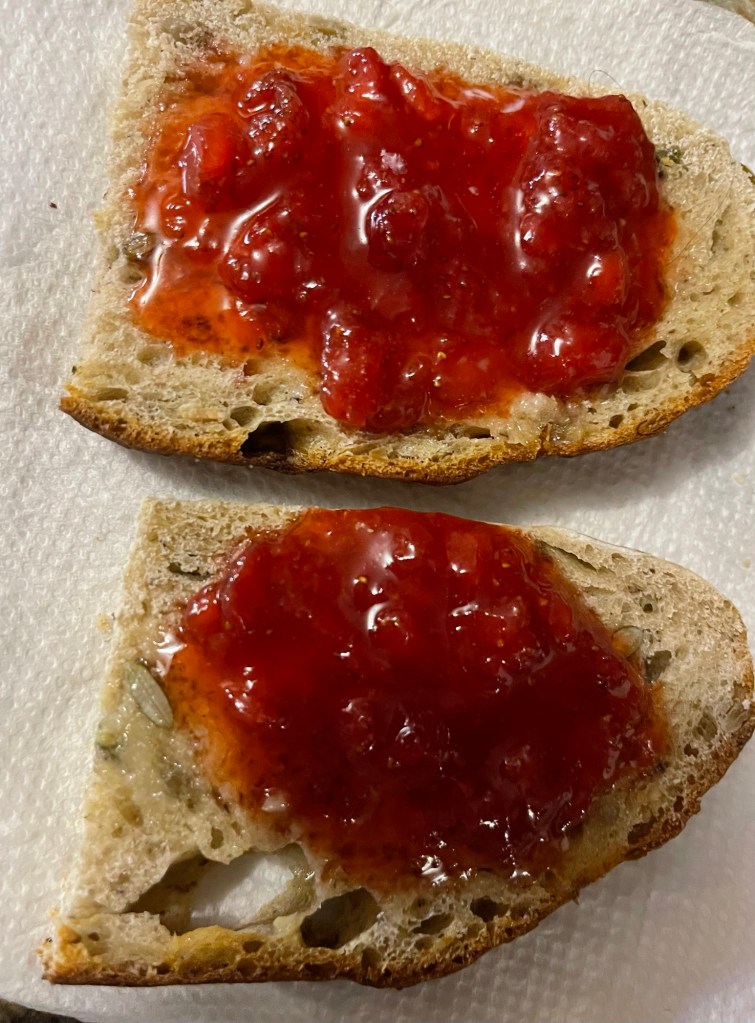
The basil is thriving!Fresh strawberry jam!
Yesterday was spent preserving strawberry jam. It’s easy to make and delicious to eat! I will post this recipe soon. I couldn’t wait for weeks to eat the jam! So, I opened a jar this morning and had it on fresh-baked bread for breakfast.
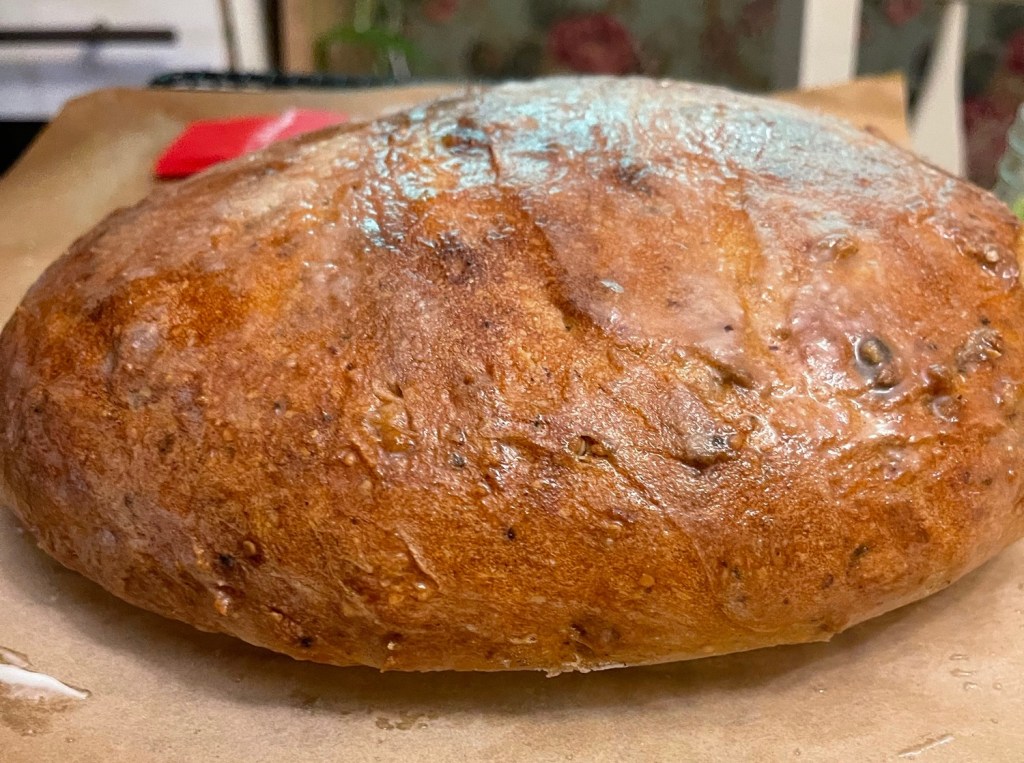
Freshly toasted baked bread and homemade jam! Home baked seeded yeast bread.
Our kitchen today is an aroma of drying herbs, yeast bread cooking, and banana bread baking. Oh, and lemon essential oil diffusing in the diffuser. Lemon essential oil is great for focus, clarity, and helps deter ants, while making the air smell clean and fresh. Essential oils are part of our daily life. We use them for medicinal purposes, to make cleaning products, to add to recipes, and to help us relax at night. We are firm believers that God created nature for mankind to enjoy and along with the enjoyment, to use for the physical, medical, and even for spiritual needs.
Chocolate mint hanging to dry.
For now, God bless, from the mountains of Kentucky. Happy foraging, planting, and preserving! Feel free to follow and or leave comments or questions. Have a wonderful Thursday!
Just a small glimpse of the beauty of spring in the mountains.
Hello, from the mountains of Kentucky! Spring has arrived in full color in our beautiful mountains. The view outside my window is a stunning array of pastel colors from the blooms and a luscious green from the trees. It’s breathtaking! I started this webpage as a means of tracking my own eating habits, helping others, and sharing recipes that I developed that are clean and align to clean eating and holistic living. Over time, my diet/food intake evolved to vegetarian, and gradually to a vegan/plant-based lifestyle, which I have maintained for over six years. I also wanted to share methods of preserving food that we/my family have used for decades. Preserving by canning, freezing, and drying have been a way of life for us since I can remember. It helps us maintain a holistic way of life. It’s a lot of hard work, but the rewards exceed the work by far. I have a desire to maintain this lifestyle for myself, my family, my readers, and to preserve the culture and beliefs and memories of my ancestor’s.
Last year’s garden mid-spring.
Holistic living can mean different things to different people. For our family, it means that we grow and preserve the majority of what we consume, we live as close to nature as possible, and we work to nourish our body, mind and soul. Plant-based eating and clean eating is a large part of our diet. Does my entire family follow a plant-based life? No, not everyone eats totally plant-based. For those that do not follow a one-hundred percent plant-based diet, we raise our own chickens, which provides eggs and meat, and recently added ducks to the flock. We also purchase fresh whole cow’s milk from a neighboring farm, as well as fresh Kentucky raised angus for those who are beef eaters. We grow our own herbs, veggies, and fruit.
Basil from our herb garden.
Holistic living also consists of using healthy clean products for our personal hygiene, cleaning supplies, and our water. Is it a hard lifestyle to maintain? No, it’s a lot of work, but work is part of the plan of exercise, and it’s fun to plan new recipes, discover new products that are clean and create our own healthy cleaning products that we use in our homes, and that we feel safe and confident in using. No harmful chemicals, non gmo, no harmful food dyes, or animal byproducts. Clean holistic living helps nourish your body so that you feel like working, getting up and having fun. It helps provide better sleep, all while ensuring that your body is devoid of toxins, thus increasing good health, and stamina.
Holistic living for nourishing the mind for our family involves a prayer life, meditation time, relaxation time, and social time with family, friends, and church family. We love to share ideas, recipes, food, and prayers with others. When our mind is healthy and our mindset is positive, the body responds well. When the mindset is positive and our prayer life is rich with conversations with our savior, assembling and worshiping with our church families, our soul is nourished; thus leading to a better whole self.
Drying peppermint for teas.
I hope you’ve enjoyed one of many of my posts for our adventures and daily life of holistic living in the mountains. I will be adding a posts soon about how we use our organically grown herb, micro-greens, and essential oils for cooking, preserving, our health, and as teas. Feel free to like, follow, and or leave a comment. I love to read your comments, and answer your questions. For now, God bless, from the mountains of Kentucky!
Good morning from the mountains of Kentucky! I hope your day is a blessed one. I am excited to bring to you my new spinach wrap recipe that I’ve been working with for a couple of weeks. Saturday’s wraps were the success that I’ve been working toward! I hope you enjoy them as much as we do!
Ingredients:
3 cups fresh organic baby spinach
3 cups all-purpose flour (I prefer King Arthur unbleached or wheat)
1 1/2 teaspoon pink Himalayan salt
3-4 tablespoons organic extra virgin olive oil
1/3 cup cold filtered water (this can be modified if needed)
1 teaspoon fresh ground oregano
1 teaspoon fresh ground basil
1 teaspoon fresh ground parsley
1/2 teaspoon fresh ground black pepper
1/2 teaspoon organic ground garlic
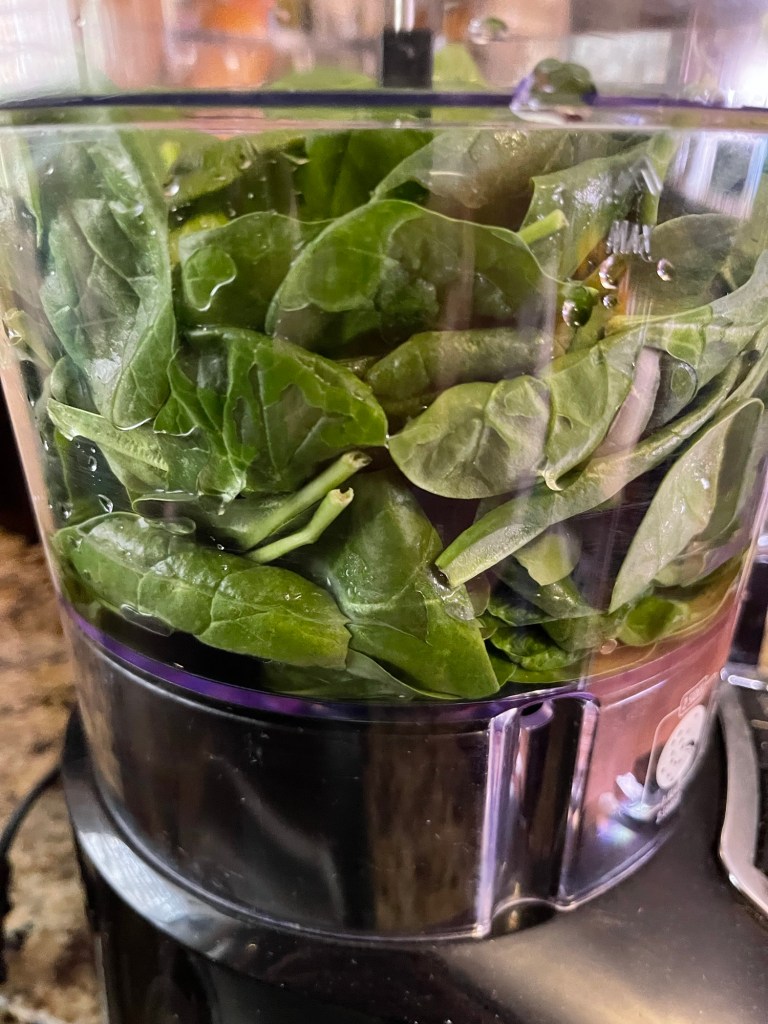
Add one cup of spinach and one cup of flour to a food processor dicing it to allow room for an additional cup of each. Dice again and add the remaining spinach and flour. Add spices, and process adding oil slowly as the mixture mixes. Add water until you have a dough consistency. Sometimes the amount of water varies. Only add what you need. If the mixture is too wet, add an additional spoon of flour and mix. You can’t go wrong on this mixture if you achieve a doughy consistency. You can play with the oil as well. If you need more, add a tiny bit.
Fresh spinach is the best!!
Preheat a cast iron skillet. I use ceramic cast iron for this and it works great. Add a tiny spray of organic extra virgin olive oil to the pan to heat. While the pan is heating spoon out a large spoon of the mixture onto a floured dough sheet or parchment paper. Using flour on your hands roll the dough into a ball and then begin rolling the dough flat.
Ball of spinach dough.Second rolling of the wrap.
A second rolling of the wrap ensures the desired thickness of the wrap. You can sprinkle flour over the wrap to prevent it from sticking. Once you have achieved the desired thickness, lay your bread in the hot pan. It only takes about 1 1/2 minutes per side. While my bread is browning, I usually roll another piece of dough. Parchment paper, coffee filters, cheese cloth, or white paper towels between the wraps will help prevent them from sticking until they’re cooled.
Preparing the wrap! This is the thickness that I like!
Remove the bread and place on your choice of liner. Once the wraps are completely cooled, I place mine in an airtight container and keep them in the fridge for fresheners. This recipe usually yields eight to nine wraps. They taste great warmed with fresh veggies, a smear of peanut butter, as a side for Italian dishes, and extremely good with no dairy cheese melted on them.
You may substitute seasonings for Mexican seasonings, plain with a little salt and pepper, or with curry seasonings. The possibilities are endless. I hope you enjoy these as much as we do. I look forward to posting new wraps. I am currently working on a high fiber flax wrap. I would love to hear how you eat yours! Feel free to like, share, comment and follow. For now, God bless from the mountains of Kentucky!
Good afternoon from the mountains of Kentucky! Today feels like spring in the mountains. Easter Lillie’s are bloomed, some of the trees and bushes are budding, and I see green plants emerging through the flower bed covering. I am excited about spring as it always feels like an opportunity for new beginnings, time to plant, and time to enjoy the beautiful mountains that we are blessed with.
Summer in the mountains!
For those of you who are serious tea drinkers, and for those who enjoy a cup of tea from time time… you’ll enjoy my series, Tea Time Tuesday. It will be a reoccurring blog post that will include random topics ranging from making teas, uses of teas, to recipes that include tea in them, and occasional recipes for goodies to eat while drinking tea. I will also review books I’ve read while enjoying a cup of tea. While some posts might be simple ramblings or inspirational words. However, today’s post is about a topic that is worthy of conversation. Loose tea verses tea bags.
I’ve been an avid tea drinker for years. I like almost all flavors of teas. But, I do have a few favorites. I love a good chai tea with oat milk, and lavender. I drink peppermint tea almost every day. I like black teas and love a good chamomile tea with either honey or lavender and sometimes both. Regardless the tea I drink, I prefer loose leaf to tea bags. The tea that I grow and dry does not even compare to purchased teas, but there are times when I buy loose leaf, especially black tea and chamomile tea. So, why do I prefer loose leaf to bagged tea? Loose leaf is more flavorful, I don’t have to worry about how long it’s been shelved, I don’t have to wonder if the bags are good quality or could they be toxic. There are so many different reasons, but flavor and the ability to use a tea ball of loose leaf tea a second time, which is a great money and tea saver, especially if you purchase tea. If you don’t like a tea ball, you can always purchase organic tea bags that you can fill yourself. The organic tea bags are great for tea on the go. They store easily in my lunch bag that I carry to work.
I’m curious about your preferences. Which do you prefer bagged tea or loose leaf, and why? I would love to hear from you. For now, God bless from the mountains of Kentucky. I think I’ll enjoy a cup of tea and porch sit a little while on this beautiful spring-like day!
Hello, from the Mountains of Kentucky! The heatwave continues in the mountains today! Dry and hot, yet beautiful! We all know what else comes with summer temperatures. Yes, that’s it! Bees! I’m not allergic to bee stings like our grandson is, but I certainly do not like the pain from those pesky things. To be so small, their stings can pack a punch!
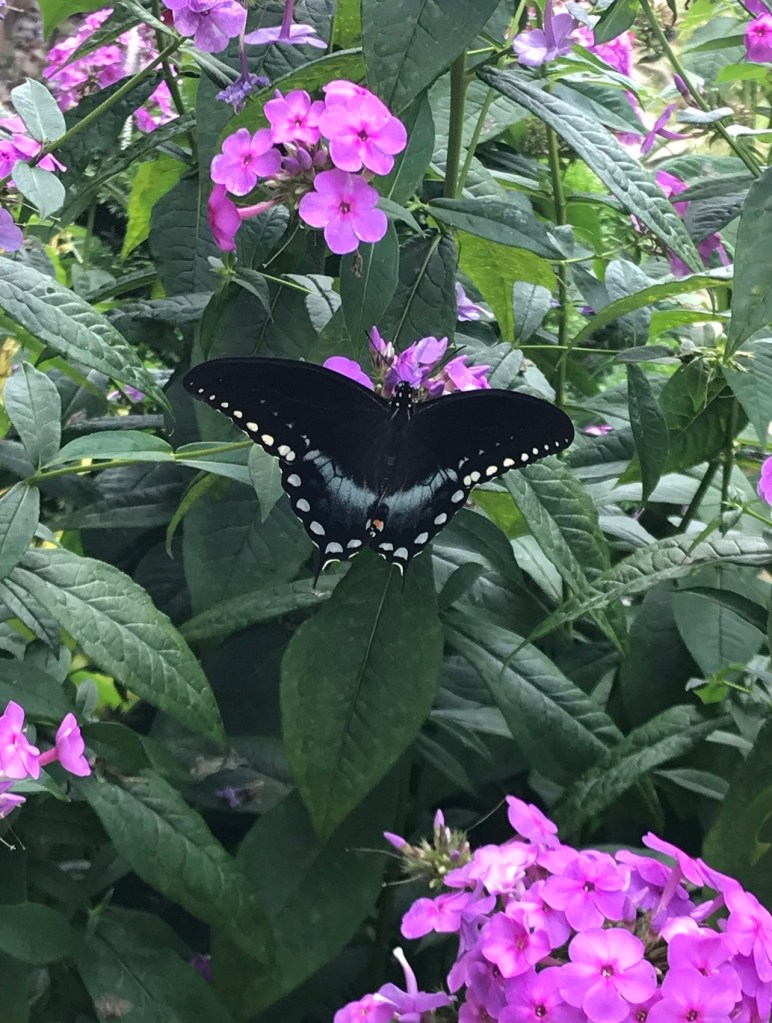
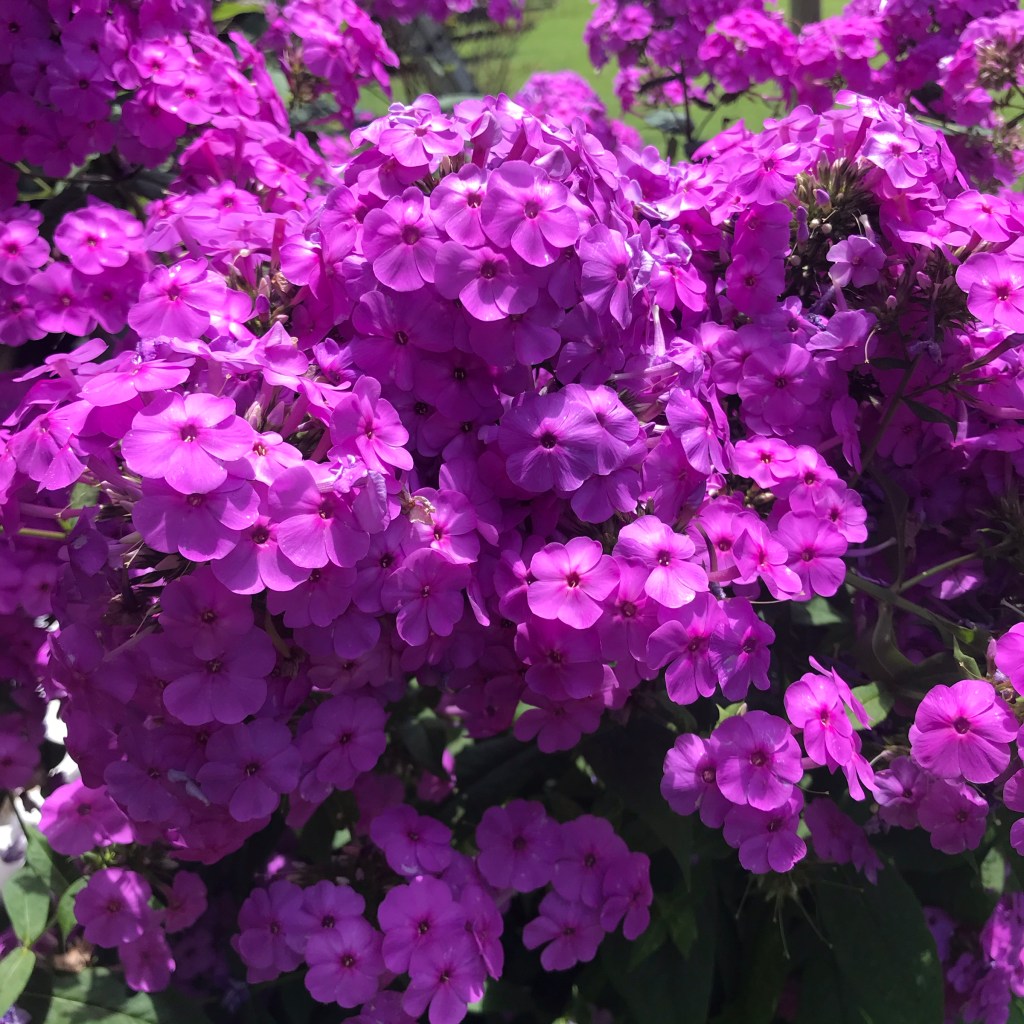
Our beautiful flocks! Butterflies love them, but so do bees!
While watering my flowers this morning, wasps, or as we call them, waspers, were swarming the flocks. I thought as I always do, if I don’t bother them they won’t bother me. Wrong! As I left the flower bed a red wasp decided to make a plunge for my hair. My first instinct was to swish my hair back and forth to encourage it to leave. It left! But, it came back with a vengeance. I returned and stung me on the shoulder through the sleeve of my shirt. Ouch!!
Lavender and basil. Crushed basil leaves helps soothe a sting.
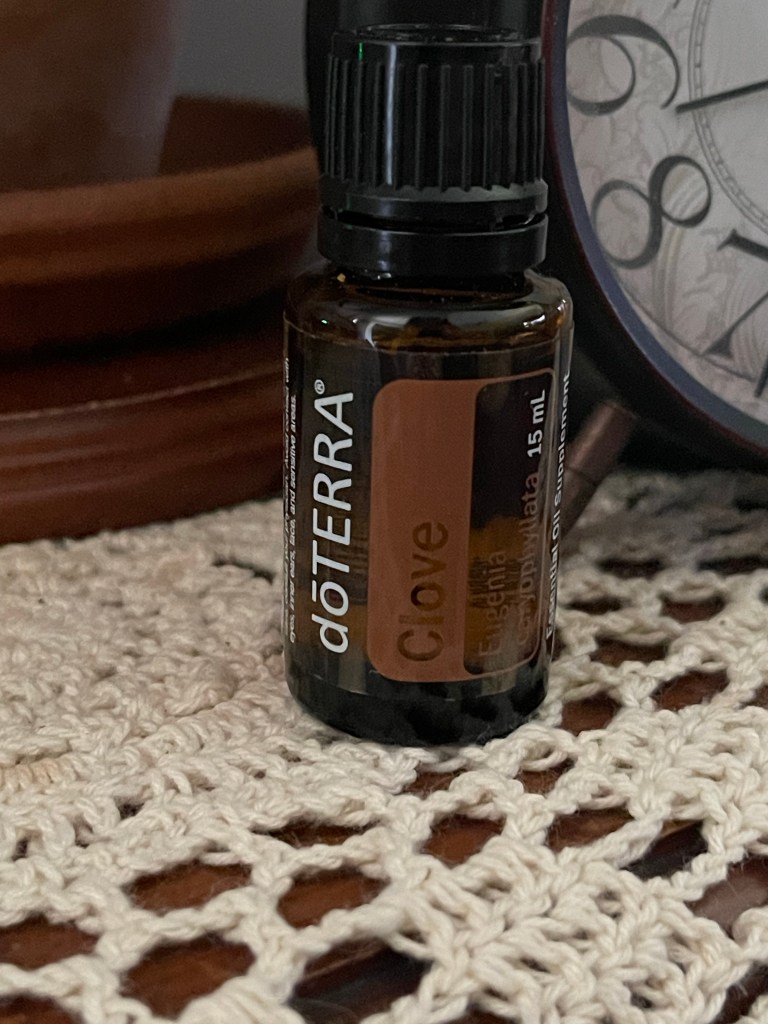
Once inside, I grabbed a roller ball of lavender and rolled it on the sting to sooth it. I had just finished drinking a cup of black so I grabbed a soaked tea bag and held it on the sting to draw the poison out. As the sting started soothing, I made my way to my apothecary chest to retrieve the purify essential oil, which acts as an antiseptic and massaged a few drops directly on and around the sting. Once it dried, I added a few drops of clove essential oil that acted as a numbing agent. It numbed the bee sting and the area around it. With the mix of essential oils, the organic tea bag, and a whispered prayer, relief came to affected area.
My apothecary chest that housed my essential oils and teas.
I am a firm believer in herbs, essential oils, and teas as well as prayer. I prefer natural methods of treatment rather than over the counter medicines. God created all living things and with that He provides us with an abundance of resources all around us. It’s a good idea to keep a few essential oils in a convenient place. I always keep a few essential essential oils in my purse and a couple of tea bags when we’re away from home, for bee stings, minor headaches, scrapes, or an upset stomach.
I look forward to sharing more tips that I have found helpful for using essential oils, herbs, and teas for minor ailments. I hope that this post will be beneficial to you and your family. Also, remember, those who are severely allergic to bee stings might find this method to help soothe stings until they can be seen by a physician or use an epipen.
Clove is a versatile oil that smells wonderful and helps numb bee stings.
Blessings from our home to yours! As always feel free to leave a message and or click follow to subscribe to my blog.
Hebrews 6:7 For the earth which drinketh in the rain that cometh oft upon it, and bringeth forth herbs meet for them by whom it is dressed, receiveth blessing from God
Hello, from the mountains of Kentucky! I hope you are having a wonderful day. Things have been quite hectic in our neck of the woods! As a college professor this is one of the busiest times of the year as we are deep into the fall semester. Each year brings growth and change, which are both welcomed, but not always easy. As famers, life has been extremely hectic as we are harvesting, preserving , and canning the remnants of our garden. As a part of a church family, it’s been a busy time of growth, and a sense of urgency to pray more for our country and family than ever before. We’ve also felt the need to preserve and can more than in years past. With that sense of urgency, we’ve actively been growing our pantry, and stocking our shelves with a little more than usual this year.
Making time for self-care, especially when life gets crazy is a must. I have found that taking the time early in the morning hours to sit quietly, reflect, meditate, pray, and journal has proven to be very therapeutic and healthy for my mind and spiritual well-being, which helps to maintain a healthy mind, heart, and soul. I enjoy crocheting, which is also very therapeutic. After prayer, devotion, and Bible study, a few minutes of crocheting is one of my times to reflect and meditate. Mornings are great for me as the house is quiet and the farm outside hasn’t come to life just yet.
Morning fog hovering in the still green mountains. Morning walks are the best! Crocheting and reflecting on the past and meditating on the day.
Holistic living is healthy and very satisfying way of life. I am often asked how I made the decision to lead a holistic life. I have been an advocate for clean eating for a great number of years, which made the transition somewhat easier. I chose clean eating for my health. My health was declining at a young age. My cholesterol was out of control, my blood pressure was extremely high, I was over weight, and I was border line diabetic. So, the journey began there! I decided that I would take back my health! I chose clean eating as many fad diets just didn’t work. Day by day, week by week, with the help and support of my family, church and friends, changes started happening! One by one I was able to stop taking meds for all of the above health issues, I lost 75, yes 75 pounds! I was finally in control of my diet and my health!
With the wonderful effects that clean eating had on my health, it evolved into my decisions to become a pescatarian, then gradually that evolved to becoming a vegetarian, which both added vitality and a new zeal for life in my thoughts and my body and evolved into an even cleaner diet. I’ve had trouble with digesting diary for years and had gradually made the change to almond milk and plant butter and cheese, which again made the transition easier. For nearly five years now, I’ve enjoyed a vegan/plant based diet, which has lead to an increase in my overall health, and a peace and satisfaction that I am making a difference in my overall well-being.
Enjoying the smell of mint drying in the kitchen.
I am also a herbalist, and enjoyed growing our own herbs for cooking, making teas, and also for minor medial problems for years. I also love sharing them with family and friends. The most recent addition to living a cleaner and healthier life, was the decision to become a doTERRA essential oil consultant. I’ve used essential oils for years, and finally decided that I would become a consultant and purchase from myself rather than online markets. This line is the best that I’ve used thus far and it’s also a nice little supplemental income as well. With a holistic lifestyle come lots of questions. The primary questions I am asked are, why and how.
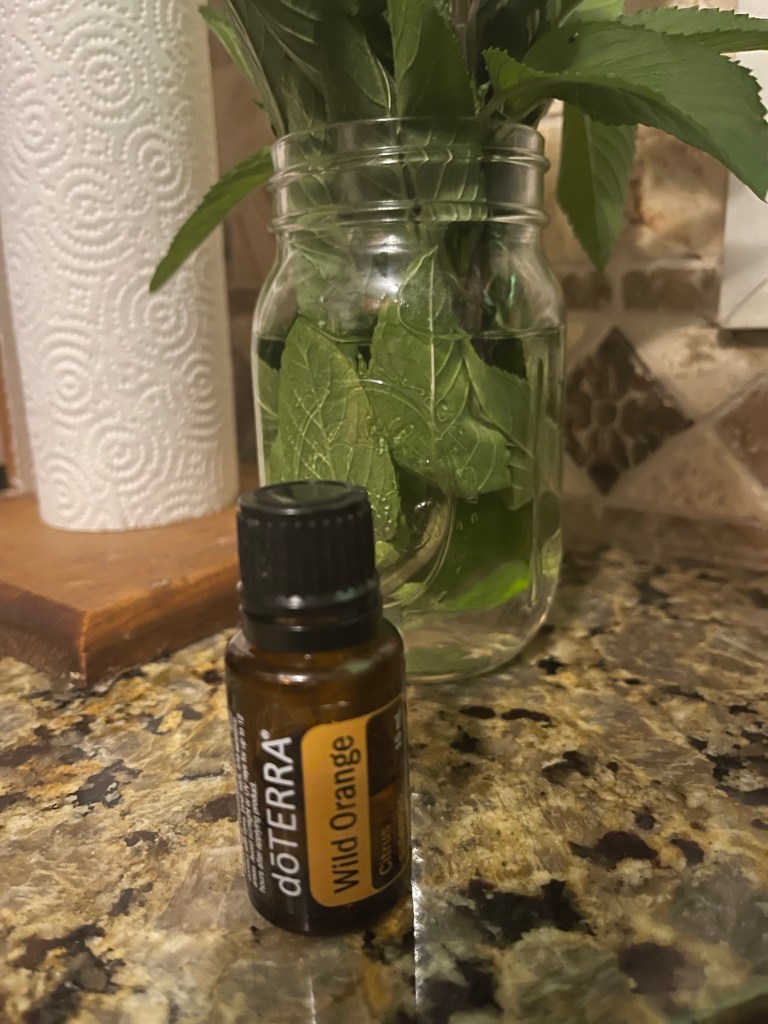
Fresh basil in the background and one of my favorite oils. Orange is very versatile.
The first question is the most common question. What inspired you to lead a holistic life? I always answer that question with a question. Why wouldn’t I? Then I begin to explain I chose this lifestyle for my health, my peace of mind, and simply put, for my life. I also add some details about the astounding amount of research revealing the high level of toxins, preservatives, and additives that basically poison the human body and our environment. These toxins are found in food, fast foods, shampoos, soaps, toothpaste, makeup, perfumes. detergents, cleaning products, air fresheners, candles, and even in our pet’s food. I’ll share another story in a different post of how we nearly lost my canine baby due to additives in what was supposed to be healthy doggie treats. That was a real eye-opener!
I always share one of the most informative books that I’ve ever read was, How Not to Die, written by Dr Gregor. There is so much information revealed within the covers of this book that confirmed my reasons for eating clean, and eating cleaner than I had been eating. His research also solidified my thoughts about why I had been food poisoned by fast food on more than one occasion, why we nearly lost our house dog, and why cleaning products and certain air fresheners lead to smothering and irritated sinuses. He exposes much about how these horrific toxins are actually allowed to be in our foods, pet foods, cleaning products, and even in medicines and vitamins that we think are helping us.
An eye-opening read!!! I encourage anyone who is interested in living a cleaner, more holistic life to read this book!
Secondly, I’m asked if it was a difficult transition. My answer is no. You don’t have to make the plunge and change everything at once. I made changes over a period time with my diet and I did the same thing with household items, hygiene items, and even my car air fresheners. I didn’t see the need to waste products that I already had on hand, so as I would empty an item, I would replace it with plant based, organic, and a cleaner item. First on the list, I would begin eliminating the toxins from my our home and our vehicles. My first elimination was laundry detergent. To prevent waste, after exhausting the last of my stock, I began using organic plant based detergents that didn’t require fabric softeners. There were some products that I had in my home that I could not convince myself to continue using. Those plug in air fresheners were tossed in the garbage, empty or not!
With the various air fresheners gone, I replaced them with diffusers for essential oils to help clean and purify the air and also bring a wide array of wonderful scents into the house. One by one I replaced our cleaning supplies with either organic plant based cleaning supplies or homemade supplies from natural ingredients. It’s quite amazing how many options are on the market and what’s even more amazing is the number of cleaners you can make using essential oils! I’ll share my bathroom cleaner soon! It cleans great, easy to make, and also prevents those toxic fumes that no one likes.
The next change was hair care products and tooth paste. doTERRA made that change easy for me as well. They have a wonderful plant based shampoo that incorporates essential oils, and a fantastic plant/based conditioner, and leave in conditioner that is excellent! I can’t even explain how wonderful my hair feels after using these products! My hair shines so much more than before and it feels less weighted. I also made the transition from usual tooth paste to a clean toxin free tooth paste from doTERRA. I chose this toothpaste simply because I’m a doTERRA consultant, and after trying it… it works! My teeth are clean and white and after reading the list of ingredients in my old toothpaste, it was an easy transition and one that I am happy I made.
doTERRA shampoo, conditioner, and leave-in conditioner. All natural!!!
Finally, vitamins was the next item to begin changing. It was easy to switch vitamins with doTERRA. The vegan vitality pack is on my monthly auto order. I love these vitamins as they’re all plant based, no additives, or artificial colors added, and they’re in veggie capsules. Essential oils, homegrown herbs, and homemade teas helps with common cold symptoms, allergies, scrapes and minor abrasions. I could go on forever with the reasons why I chose a holistic lifestyle.
Vitality pack! This was a game-changer! Even though I already took vitamins and had for years… I noticed an immediate change in my stamina!!
I’m asked if I miss fast foods, soft drinks, and what in the world do I do about coffee. Number one, I don’t miss fast foods. As a matter of fact, the cleaner you eat, the less you even want fast foods. My husband and I now prefer food prepared at home ten to one over restaurant foods. I gave soft drinks up over twenty years ago for my own personal health and have never looked back. I’ll be honest, coffee change took a while. It took a little while and a lot of different coffees to find a good organic coffee that I truly enjoyed, but have finally found one that is very satisfying. I have also replaced much of the coffee that I drank during the day and evenings with organic and my homemade teas.
Delicious organic coffee from Amazon!!!
Finally, I’m asked if I feel better physically since making so many changes. Simply omitting meats and dairy from my diet was a game changer with my cholesterol and inflammation. Omitting artificial colors, scents, and toxic preservatives really made a positive impact on my allergies. Plant based vitamins, a good clean diet, and the removal of toxic smells in our home has made a positive impact on my overall health, stamina, and lead to a much more simple life that makes me happy knowing I am doing something to improve my quality of life, my families, and decreasing the chances of disease in our bodies.
Enjoy the simple things that bring joy and support your health. Organic lavender growing near our front door! Love to add to plant butter, cookies, teas, and more.
If you’re interested in holistic living, start slow. Remove one thing at a time. Don’t try to do it all at one time! You’ll become overwhelmed, which might result in giving up. Make one change and allow that change to become a routine. Once you feel grounded and content with that change, make a second change. As you empty or exhaust a supply of one particular item, replace it with a cleaner wholesome item. Read the labels, do the research, do a little soul searching, meditate, pray, and take holistic living one day and one change at a time.
Take time to enjoy the change. One change at a time and you’ll be more likely to stay the course. It’s so worth it!
I hope you’ve enjoyed this post. Feel free to leave comments. I enjoy reading comments and answering questions. For now, God bless from the mountains of Kentucky! Happy Fall!!!
Hello, from the mountains of Kentucky! I hope your July is off to a beautiful start! We’ve had a blessed week with just enough rain to water our thirsty garden and make the zucchini, summer squash, and cucumbers explode. The number of gorgeous veggies awaiting my attention caused me to wake even earlier today. After having a hot cup of coffee, relaxing with my daily devotional, prayer, and another fascinating chapter of the word, I looked at the tasks that lay ahead of me for the day. Farming looks glamorous to those who see it as all the veggies you can eat, decreased payout at the grocery store, and the many wonderful health benefits. All of these benefits are true, but the work and the labor are also very real… but satisfying. Chores are a big part of planting, growing, maintaining, and harvesting the rewards. After reading a chapter of my chosen summer read, What the Wind Knows, it was time to get up and get started checking things off my list. Yes, I am a list maker! It helps me feel organized.
The day began with watering the herbs, which needed harvesting again. It’s been a great year for all of our herbs. I quickly clipped lavender blooms to dry for flavoring teas, and clipped various types of mint. After washing and drying the herbs, I quickly tied them in bundles to hang for drying. The aroma of fresh herbs drying in the kitchen makes me happy.
Fresh mint hanging in the kitchen! This is chocolate mint. It makes great tea! Lavender Blooms for flavoring Tea
Weekly household chores were next on the agenda. One by one, I checked them off my list. But, between chores… the squash, zucchini, and cucumbers were reoccurring thoughts. So, I decided to bake a little zucchini bread. I also vacuum sealed a few bags of sliced squash and zucchini for the freezer to enjoy this winter. Next on the list, was the sink full of cucumbers. Checking my time, I decided that I would have time to make seven quarts of spicy kosher dill pickles, which are always tasty any time of the year. If you’ve not tried my recipe for spicy kosher dills, you can follow the link below to learn more. These pickles are a family favorite, as well as a favorite among many of our neighbors. Canning Spicy Kosher Dill Pickles
We’ve had an abundance of summer squash and zucchini this year!
Now to proofread. My editor is expecting the final revisions of the last chapters to be ready later this week. I am in the homestretch of finishing this nearly year long project. I’m excited for my students to have this new workbook in their hands. It is designed to accompany the textbook I wrote in 2019. Thankfully, the abundance of rain we received over the last few weeks allowed me to work ahead of schedule, but also resulted in lots of weeds. That was another thing on the list to attend to. Hoeing usually means all hands on deck! Again, lots of hard work, but very satisfying work.
The zucchini kept calling my name! I ended up grating several zucchini for the freezer for bread this winter. I use a hand-held box grater and a glass measuring cup lined with white paper towel or cheese cloth. I grate the clean zucchini into the cup until the measuring cup is full. This is perfect for breads as my recipe calls for one full cup of grated zucchini. It also works well because the paper towel or cheesecloth is already holding the zucchini, and ready to be squeezed to remove the liquid before freezing. I felt better about having used several of the beautiful green bounty.
Three hours later, seven quarts of spicy kosher pickles are cooling and waiting to be taken to the basement for good eating this winter! Zucchini bread will be cooling soon. One loaf to eat and one for the freezer. Yes, you can freeze whole loaves of homemade bread. Allow the bread to completely cool, remove from loaf pan, and wrap twice with plastic wrap, then once with aluminum foil. Once the bread isfrozen, you can vacuum seal for reassurance of no frost gathering on the bread. When you’re ready to eat the bread, allow it to thaw in the fridge. Once it’s completely thawed, remove the vacuum seal and unwrap and enjoy. It’s amazing how moist the bread is.
Spicy Kosher Pickles
I hope you’ve enjoyed spending a little time with me in the mountains of Kentucky. It’s been a busy day, but one that makes me feel accomplished. Feel free to leave comments. I love to hear from my readers. I’ll share the vegan zucchini bread recipe soon. It’s a keeper. Also, I’m excited to share my new Indian relish recipe with you! I’m hoping to have it posted later this week. Check out the picture beneath the bread photo! God bless from the mountains of Kentucky.


















 A Healthier Me...Homesteading Simple & Clean