My Top Ten Herbs (part five-oregano)

Hello from the mountains of Kentucky! I am excited to share another of my favorite herbs with you. In this post I’ll share my thoughts and ideas about oregano as well as some of my favorite uses, how I dry it for spices, use it as a natural antibiotic, and more. So, let’s get started.

Oregano is member of the mint family. Oregano is perennial that is typically hardy in warmer zones. It prefers relatively hot dry climate. It grows well in beds and pots. However, to ensure it returns in the spring, it should be planted in the ground. It is best to plant oregano in the spring, but it can be planted later in the season. There are several types of oregano including Spanish, Turkish, and Greek, which is the most common and my preferred.
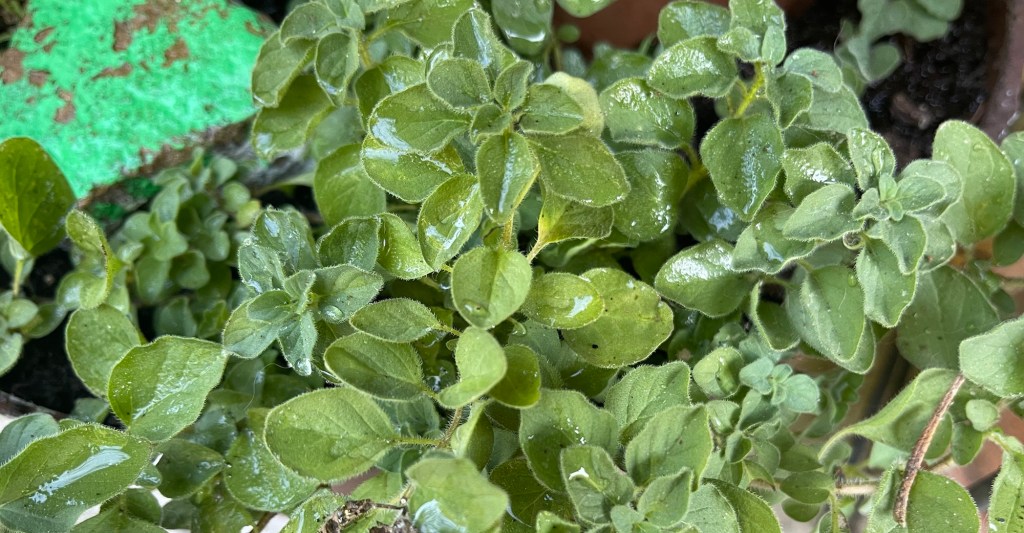
One of our pots of oregano. The painted rock was a gift from our grandson.

Oregano grows well in a sunny area in well-drained soil. I water oregano that I have planted in pots daily, primarily because it is planted in terracotta pots, which drains and dries out easily. I water the oregano in the herb garden every other day, or as needed. I watered it daily during this 92-94 temperatures we’ve been having lately. I like to fertilize my herbs with banana water or a weak tea mixture at least once a week. Banana water is simply water that I soak organic banana peels in over night. This process adds potassium to the soil. The weak tea is made from leftover organic tea bags or leaves infused in a gallon of water. This type of natural fertilizer adds antioxidants to the soil and plants much like tea provides for our bodies.

Our newest addition of oregano in our raised bed.

Oregano is typically thought of as an Italian spice, but it is also a great spice for eggs, tofu scrambles, and it makes a nice addition of flavor to soups, baked potatoes and of course spaghetti, and lasagna. I like my dried oregano use in my homemade spinach tortillas. I have included the link for Vegan Italian Spinach Wraps These delicious wraps take a small amount of time to prepare, they’re easy to make, and they’re healthy. They make a great snack as well as a tasty wrap.

I typically use the oregano plants that I grow in pots for cooking and the oregano in the garden for medicinal purposes, and for harvesting to dry for spices. Pruning the oregano creates a fuller mor bushy plant. I trim and prune it as needed throughout the summer. I like to clip stems to use fresh when I am cooking. When I am ready to harvest, I cut the oregano in the early to mid morning hours before the sun hits the herbs. I clean the herbs by giving them a gentle rinse and patting them dry. A salad spinner can be used to remove any additional moisture. I like to hang bundles of the cut oregano stems beneath the upper kitchen cabinets to dry. Make sure the herbs are completely dry before bundling to prevent mold from forming in the middle of the bundle.
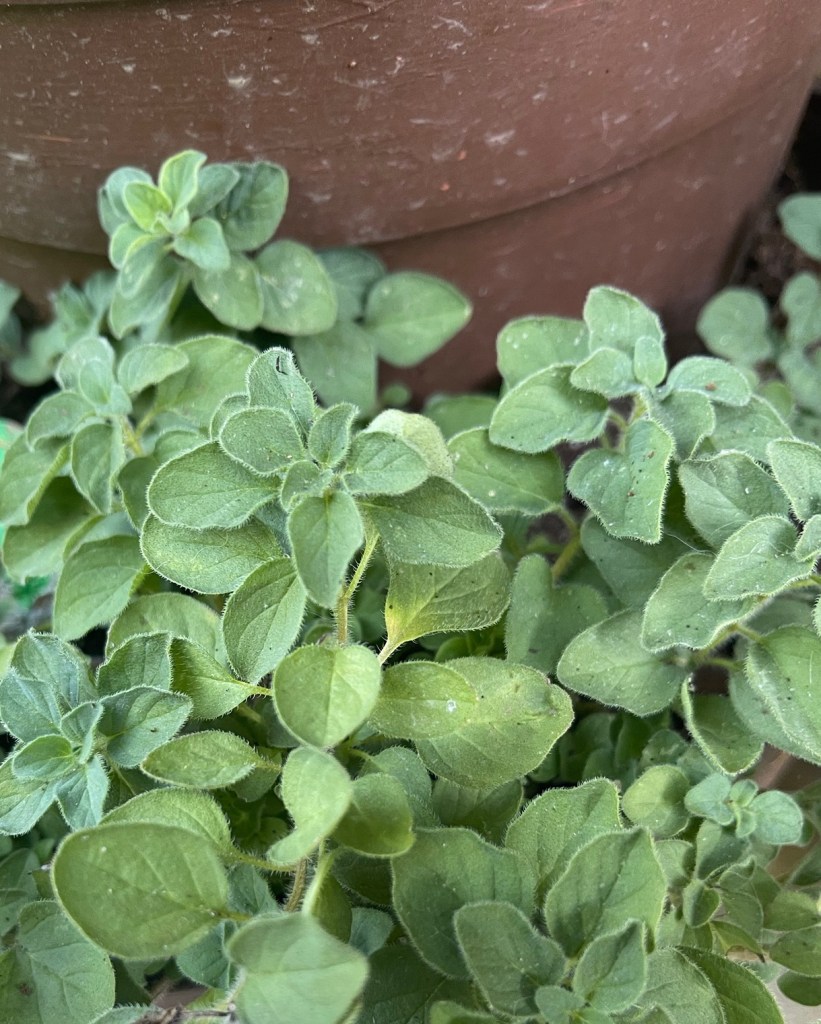
My cooking oregano plant.

I love the aroma that fills the house while it’s drying. When I have a larger harvest, I dry it by adding the cut herbs to the drying rack. Keep the herbs away from direct sunlight when drying. Allow the oregano to air dry until it becomes crunchy. Once the herbs are dry, I like to run them through the spice grinder a few times to create a nice spice to cook with. I also rough grind some of the dried oregano for a more textured spice. I store the herbs in a glass container with a lid and keep them in a cabinet away from direct sunlight. Herbs can be dried in the oven or in a dehydrator. However, air drying is my preferred method. I feel that the herbs are more potent when air dried.

I also like to infuse dried oregano in organic extra virgin olive oil and use it as a rub for aching joints, to sooth minor cuts, and bruises. Many have used oregano oil for centuries as an antibiotic by taking one to two drops of oil daily. To make an internal oil, add dried oregano to oil and place in a dark area for four to six weeks. Next, strain the oil into a small glass bottle with a dropper. Keep the oil stored in a dry and dark area. I typically keep my bottoms of oil in an apothecary chest for easy access and better organization. Oregano oil has been used for parasite infections, digestion, and others have used it for coughs and congestion. However, there is not medical/scientific evidence of the medicinal benefits of oregano oil.

Antique apothecary chest found in Tennessee at an estate sale.

I prefer to use dried oregano in oil in what is called a cold infusion. This type of infusion has been used for centuries. It is less likely to become rancid or gather mold than fresh herbs will. To make an infusion, fill half of a clean glass jar with dried oregano leaves and the remainder of the jar with a good quality organic olive oil. Label and date your jar so you will recognize it with ease. Seal the jar and set aside away from direct sunlight. I typically store my infused jars of oil in the pantry. Allow the oil to infuse the oregano for at least four weeks. The oil maintains its potency better in a cool dry place. I like to add some of the oil in a small glass dropper bottle for internal use. The shelf-life infused oils is typically two years, if the oil is stored correctly. I recently read where some people add a drop of organic vitamin E oil to their infused oil to help increase the shelf life. I personally have not tried this. doTERRA oregano oil is an essential in my medicine cabinet as well. Essential oil is different than infused oil. It is more concentrated and potent. I would love to make essential oils, but the equipment to extract the oils is a bit too pricy for me. So, I buy top-grade essential oils from doTERRA. If you are interested in ordering, selling, or becoming a member of doTerra, simply follow the link https://referral.doterra.me/12640050

I find it interesting that oregano is one of the herbs that many herbalists keep in their survival kit, take camping, and have conveniently located in their medicine cabinets, as well as their spice racks. It’s a great addition of flavor to many dishes, breads, and soups, and a natural healing herb that is very versatile. It is easy to grow, maintain, harvest, and easy to create spices, teas, and oils. I am anxious to hear how you incorporate the pungent beautiful herb of oregano in your daily life.

Head over to the Apple podcast, and search for, Homesteading in the Mountains, to listen my latest episode about oregano.

Feel free to comment, like, and or follow my blog for more posts about how I incorporate herbs, essential oil, plant-based recipes, and homesteading in the mountains. Be sure to check back soon, as I will be posting my new zucchini fritter recipe. It’s a new favorite in our family. God bless from the mountains of Kentucky.

Living Holistically in the Mountains

Good afternoon, from the mountains of Kentucky. I hope your week is going well. It’s been a busy one this week in our neck of the woods. Spring is usually busy with planting, foraging, preserving, harvesting and drying. We’ve managed between long bouts of rain to plant our squash and zucchini, tomatoes, kale, cucumbers, and peppers. The garden is taking shape. Yet, there’s a lot more to plant. A lot of work with great rewards.

We’ve planted and foraged mullein to dry for tea. We’ve found mullein tea good for our respiratory problems, common colds, flu, and bronchitis. It’s a staple in our household. The tea can be made a few different ways. The leaves can be cleaned and dried for steeping hot tea, or the leaves can be cleaned and added to filtered water and placed in a covered glass container in the fridge for cold tea. A little honey in either and we’ve found it to be a tasty bit of nature that has wonderful results. (More to come about the use of mullein.)

Harvesting the bottom mullein leaves.
Iris blooms are my favorite!

Our flowers and herb garden is flourishing this year. I’ve harvested chocolate mint, peppermint, and strawberry mint twice already. We keep fresh mint for cooking, be stings, and for baking. Dried mint is used for steeping delicious teas. Peppermint tea has great medicinal qualities for digestion issues. It’s a great addition to green tea as well, and is tasty in a cool glass of water from our Berkey. Yesterday, was a day for clipping basil, more mint, and chive blooms for seeds. I also harvested tarragon and bit of lemon basil. Our herbs are doing exceptionally well this year. I am a believer that when nature produces an abundance of something, it will be needed in weeks or even months ahead. We enjoy sharing our harvest with the elderly who can no longer garden and those who do not have land for gardens. We are believers of tithing our blessings with others. It seems the more we give, the more our gardens grow and produce.

The basil is thriving!
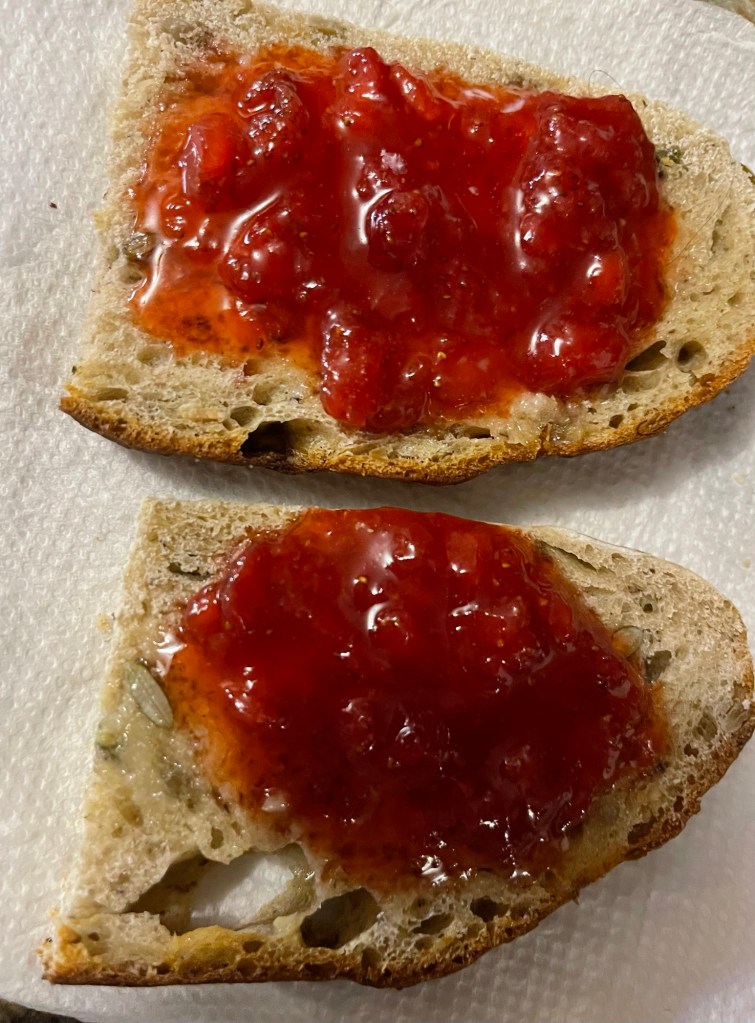
Fresh strawberry jam!

Yesterday was spent preserving strawberry jam. It’s easy to make and delicious to eat! I will post this recipe soon. I couldn’t wait for weeks to eat the jam! So, I opened a jar this morning and had it on fresh-baked bread for breakfast.

Freshly toasted baked bread and homemade jam!
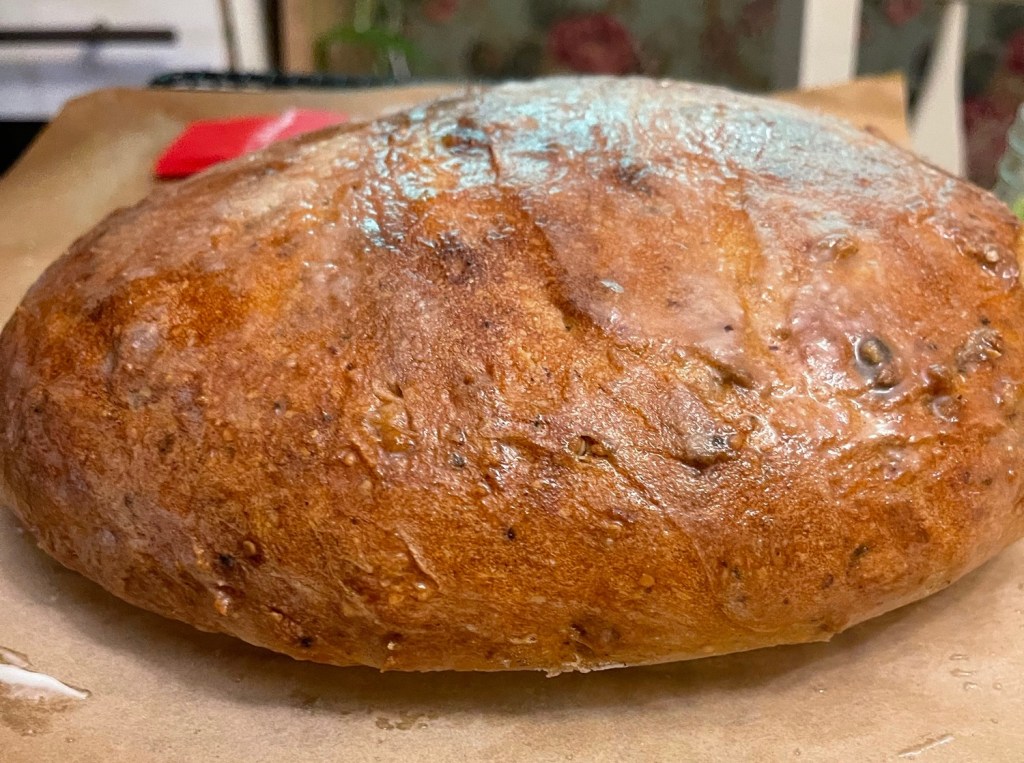
Home baked seeded yeast bread.

Our kitchen today is an aroma of drying herbs, yeast bread cooking, and banana bread baking. Oh, and lemon essential oil diffusing in the diffuser. Lemon essential oil is great for focus, clarity, and helps deter ants, while making the air smell clean and fresh. Essential oils are part of our daily life. We use them for medicinal purposes, to make cleaning products, to add to recipes, and to help us relax at night. We are firm believers that God created nature for mankind to enjoy and along with the enjoyment, to use for the physical, medical, and even for spiritual needs.

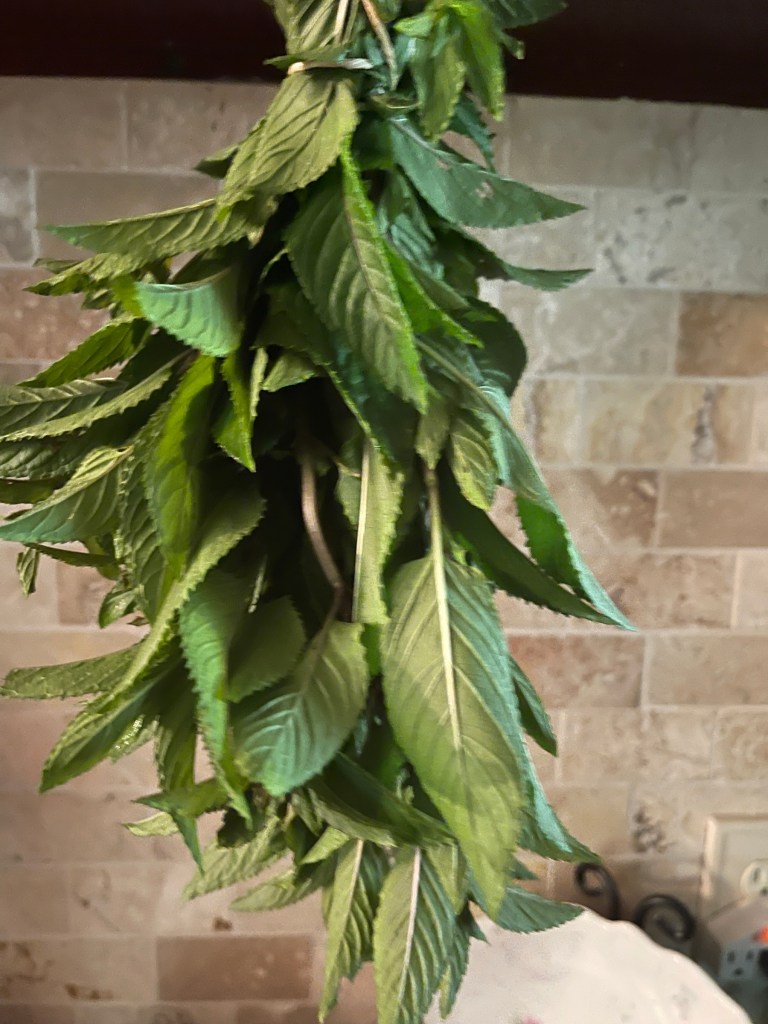
Chocolate mint hanging to dry.

For now, God bless, from the mountains of Kentucky. Happy foraging, planting, and preserving! Feel free to follow and or leave comments or questions. Have a wonderful Thursday!

Our roses are beautiful this year!

Updated Holistic Living in the Mountains

Just a small glimpse of the beauty of spring in the mountains.

Hello, from the mountains of Kentucky! Spring has arrived in full color in our beautiful mountains. The view outside my window is a stunning array of pastel colors from the blooms and a luscious green from the trees. It’s breathtaking! I started this webpage as a means of tracking my own eating habits, helping others, and sharing recipes that I developed that are clean and align to clean eating and holistic living. Over time, my diet/food intake evolved to vegetarian, and gradually to a vegan/plant-based lifestyle, which I have maintained for over six years. I also wanted to share methods of preserving food that we/my family have used for decades. Preserving by canning, freezing, and drying have been a way of life for us since I can remember. It helps us maintain a holistic way of life. It’s a lot of hard work, but the rewards exceed the work by far. I have a desire to maintain this lifestyle for myself, my family, my readers, and to preserve the culture and beliefs and memories of my ancestor’s.

Last year’s garden mid-spring.

Holistic living can mean different things to different people. For our family, it means that we grow and preserve the majority of what we consume, we live as close to nature as possible, and we work to nourish our body, mind and soul. Plant-based eating and clean eating is a large part of our diet. Does my entire family follow a plant-based life? No, not everyone eats totally plant-based. For those that do not follow a one-hundred percent plant-based diet, we raise our own chickens, which provides eggs and meat, and recently added ducks to the flock. We also purchase fresh whole cow’s milk from a neighboring farm, as well as fresh Kentucky raised angus for those who are beef eaters. We grow our own herbs, veggies, and fruit.

Basil from our herb garden.

Holistic living also consists of using healthy clean products for our personal hygiene, cleaning supplies, and our water. Is it a hard lifestyle to maintain? No, it’s a lot of work, but work is part of the plan of exercise, and it’s fun to plan new recipes, discover new products that are clean and create our own healthy cleaning products that we use in our homes, and that we feel safe and confident in using. No harmful chemicals, non gmo, no harmful food dyes, or animal byproducts. Clean holistic living helps nourish your body so that you feel like working, getting up and having fun. It helps provide better sleep, all while ensuring that your body is devoid of toxins, thus increasing good health, and stamina.

Holistic living for nourishing the mind for our family involves a prayer life, meditation time, relaxation time, and social time with family, friends, and church family. We love to share ideas, recipes, food, and prayers with others. When our mind is healthy and our mindset is positive, the body responds well. When the mindset is positive and our prayer life is rich with conversations with our savior, assembling and worshiping with our church families, our soul is nourished; thus leading to a better whole self.

Drying peppermint for teas.

I hope you’ve enjoyed one of many of my posts for our adventures and daily life of holistic living in the mountains. I will be adding a posts soon about how we use our organically grown herb, micro-greens, and essential oils for cooking, preserving, our health, and as teas. Feel free to like, follow, and or leave a comment. I love to read your comments, and answer your questions. For now, God bless, from the mountains of Kentucky!

Making Organic Elderberry Syrup

Beautiful fall mountains of KY

During COVID many people rediscovered the health benefits of elderberries. I, myself, started taking a good organic elderberry supplement to enhance my immune system. Finding organic elderberry syrup was difficult or ridiculously expensive at the time, and the supplement was not inexpensive. After paying for the supplement for a few years, I decided to try my hand at making elderberry syrup. I am very pleased with the results and inspired to share my recipe with my readers.

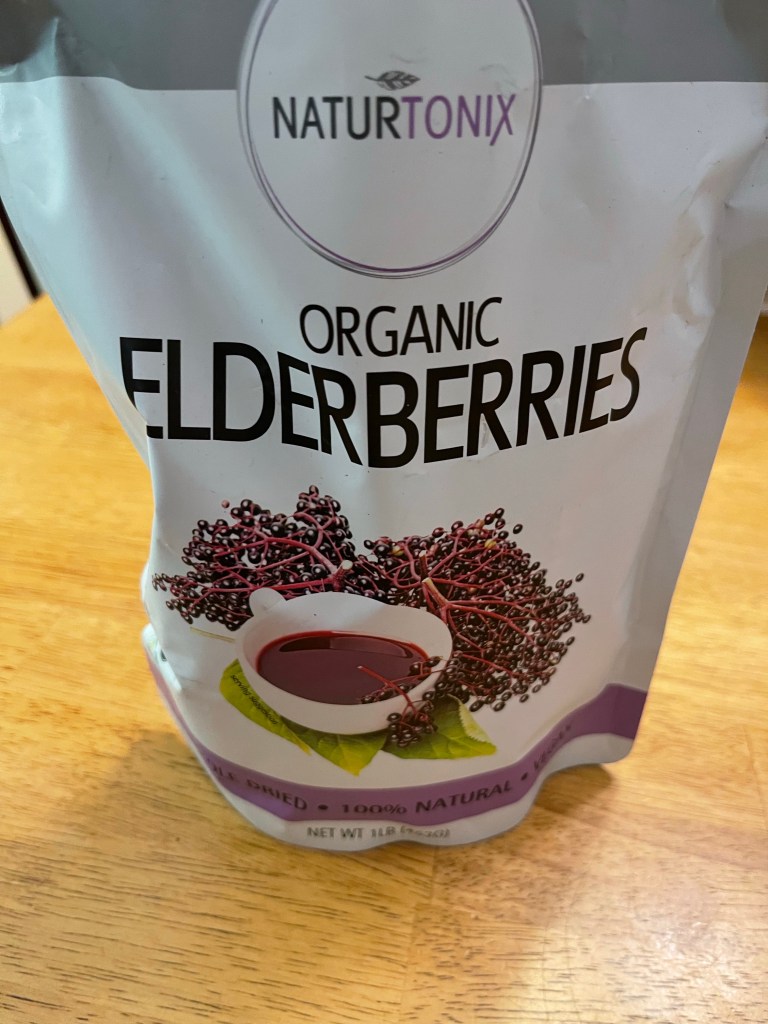
There were challenges along the way. But, with determination, I was able to overcome those. First, I wasn’t able to find someone with an elderberry tree that was willing to part with elderberries, so I did the next best thing. I looked on Amazon for organic dried elderberries. The ones pictured below had the best price, largest amount, and the best rating.

Dried organic elderberries from Amazon

Next, I experimented with the amount of elderberries I would mix. After a bit of research and experimental tries, I decided the syrup would be tastier with some spices added. After a few batches, I decided on the addition of organic clove, organic ginger, organic cinnamon and local honey. With this in mind, I was ready to see if the taste was right. It was delicious!


Ingredients (makes a pint)
3/4 cup Dried elderberries
3 cups filtered water
1/2 tsp dried clove
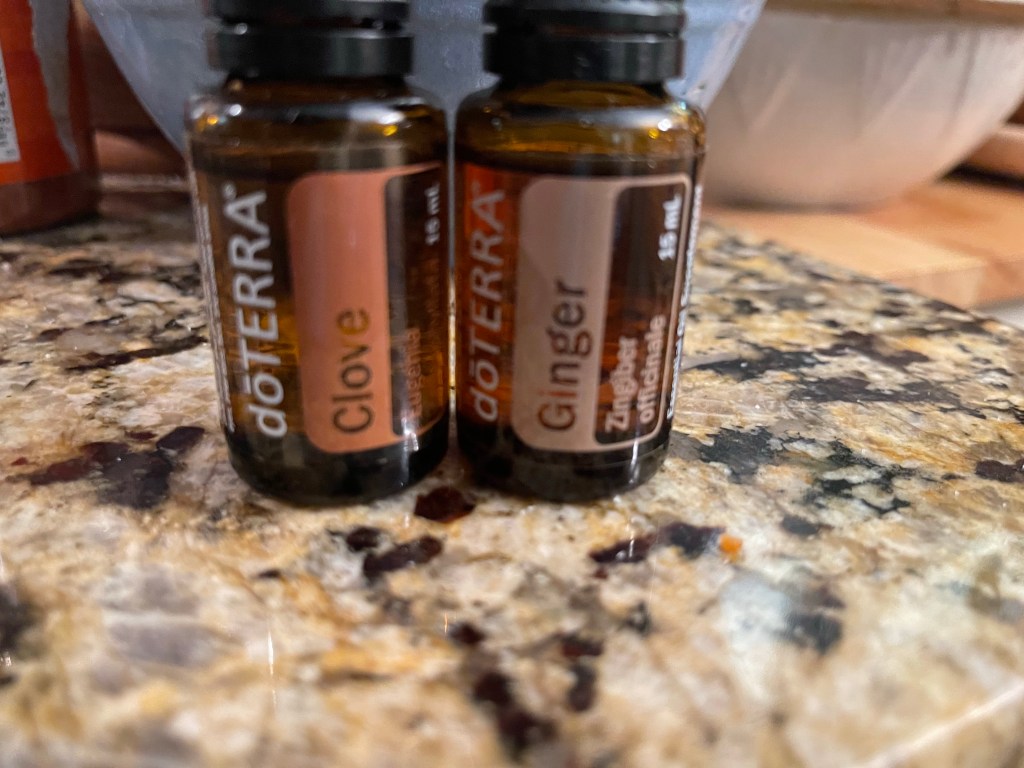
1/2 tsp doTERRA clove essential oil
1/2 tsp doTERRA ginger essential oil
1/2 tsp dried ginger
1 tsp cinnamon
Fresh honey to taste

Essential oils are optional. I love the benefits of them and the taste. Read the labels closely before using to ensure they’re consumable.

Process

Add the three cups of filtered water to a stainless steel saucepan. Add 3/4 cup dried elderberries. Add the remaining ingredients except the honey. Bring the ingredients to slow boil. Set a timer and boil the mixture for 45 minutes. After 45 minutes turn the burner off and cover the mixture and allow it to cool. When the mixture is completely cooled strain completely through a fine mesh strainer into a clear pint jar. Cheese cloth can be used as well. Add fresh honey to taste and stir well. Place a lid on the jar and for a better taste keep it refrigerated.

My fist jar after a couple of days of use.

I take a tablespoon a day. A pint typically lasts for two weeks. The taste is wonderful. Elderberry’s have a wide array of health benefits. I’m not sure if the elderberry syrup helps increase one’s sleep, but I have slept unusually well since I started using the syrup as a daily regimen.

I hope you enjoy this simple recipe. Feel free to comment or leave questions. For now, God bless from the mountains of Kentucky!

Essential Oils, Tea Bags, and Bee Stings

Hello, from the Mountains of Kentucky! The heatwave continues in the mountains today! Dry and hot, yet beautiful! We all know what else comes with summer temperatures. Yes, that’s it! Bees! I’m not allergic to bee stings like our grandson is, but I certainly do not like the pain from those pesky things. To be so small, their stings can pack a punch!

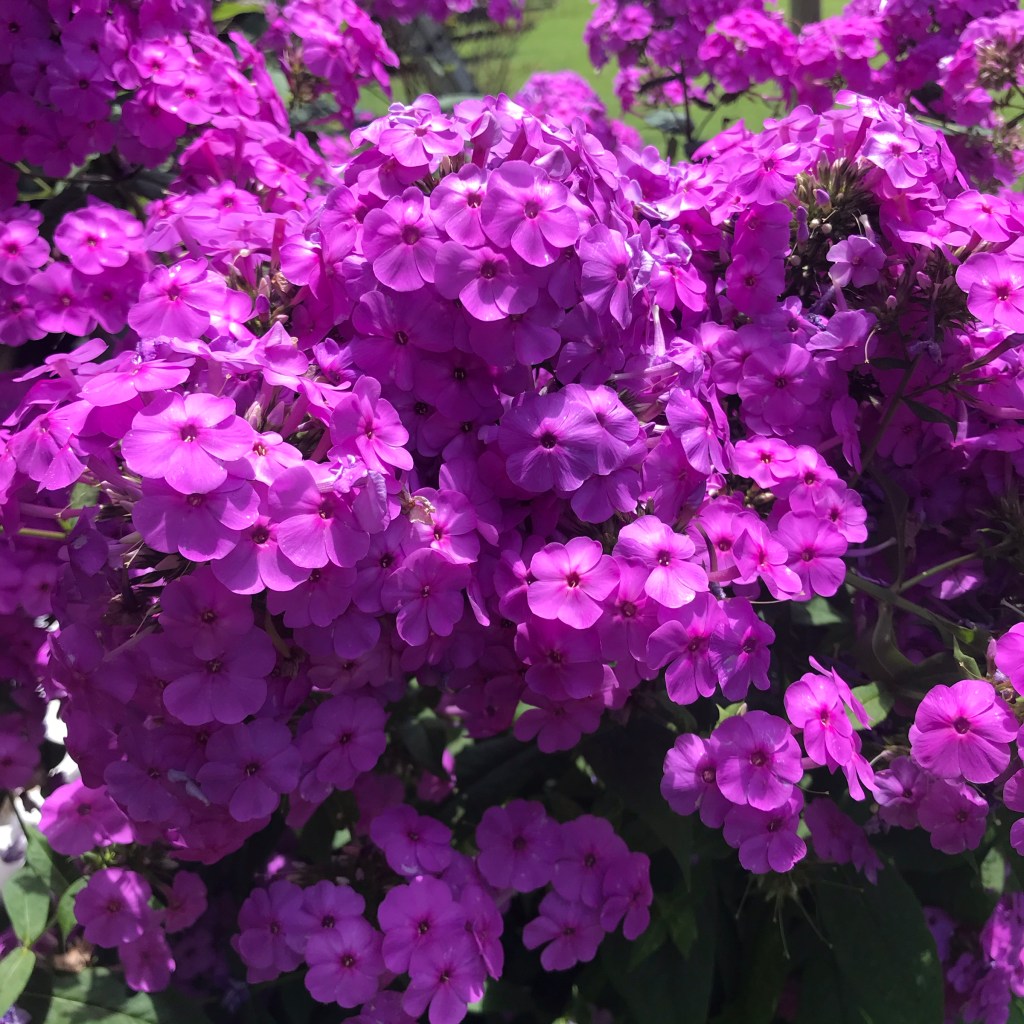
Our beautiful flocks! Butterflies love them, but so do bees!

While watering my flowers this morning, wasps, or as we call them, waspers, were swarming the flocks. I thought as I always do, if I don’t bother them they won’t bother me. Wrong! As I left the flower bed a red wasp decided to make a plunge for my hair. My first instinct was to swish my hair back and forth to encourage it to leave. It left! But, it came back with a vengeance. I returned and stung me on the shoulder through the sleeve of my shirt. Ouch!!

Lavender and basil. Crushed basil leaves helps soothe a sting.

Once inside, I grabbed a roller ball of lavender and rolled it on the sting to sooth it. I had just finished drinking a cup of black so I grabbed a soaked tea bag and held it on the sting to draw the poison out. As the sting started soothing, I made my way to my apothecary chest to retrieve the purify essential oil, which acts as an antiseptic and massaged a few drops directly on and around the sting. Once it dried, I added a few drops of clove essential oil that acted as a numbing agent. It numbed the bee sting and the area around it. With the mix of essential oils, the organic tea bag, and a whispered prayer, relief came to affected area.

My apothecary chest that housed my essential oils and teas.

I am a firm believer in herbs, essential oils, and teas as well as prayer. I prefer natural methods of treatment rather than over the counter medicines. God created all living things and with that He provides us with an abundance of resources all around us. It’s a good idea to keep a few essential oils in a convenient place. I always keep a few essential essential oils in my purse and a couple of tea bags when we’re away from home, for bee stings, minor headaches, scrapes, or an upset stomach.

I look forward to sharing more tips that I have found helpful for using essential oils, herbs, and teas for minor ailments. I hope that this post will be beneficial to you and your family. Also, remember, those who are severely allergic to bee stings might find this method to help soothe stings until they can be seen by a physician or use an epipen.

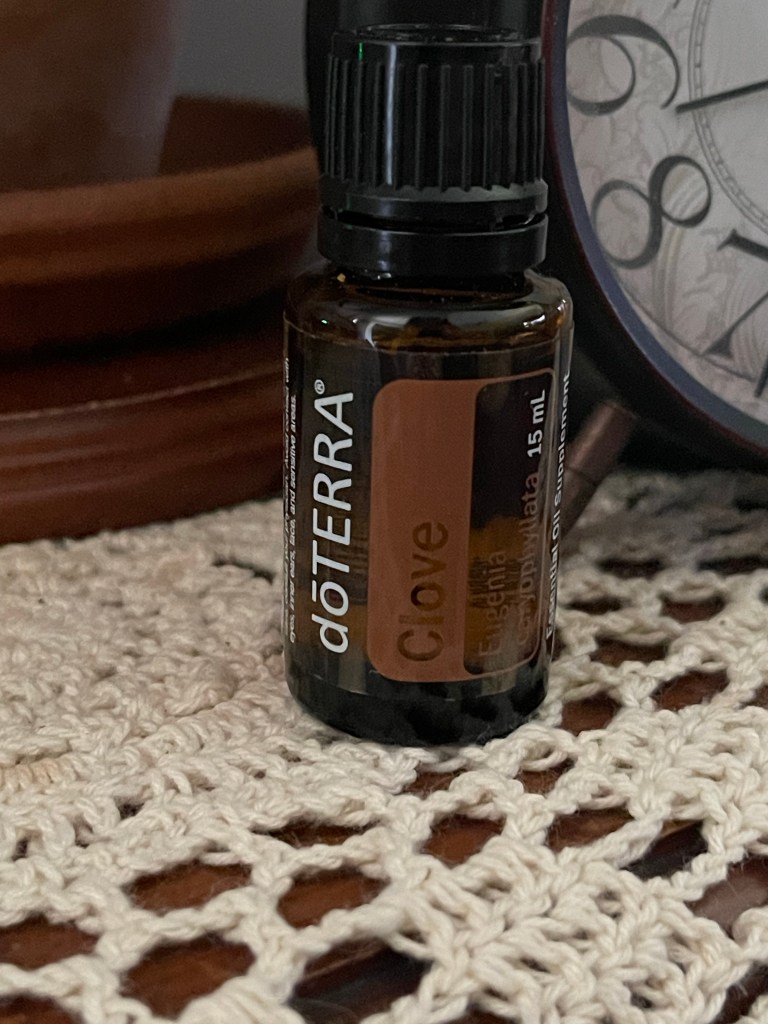
Clove is a versatile oil that smells wonderful and helps numb bee stings.

Blessings from our home to yours! As always feel free to leave a message and or click follow to subscribe to my blog.

Hebrews 6:7 For the earth which drinketh in the rain that cometh oft upon it, and bringeth forth herbs meet for them by whom it is dressed, receiveth blessing from God

Holistic Living

Hello, from the mountains of Kentucky! I hope you are having a wonderful day. Things have been quite hectic in our neck of the woods! As a college professor this is one of the busiest times of the year as we are deep into the fall semester. Each year brings growth and change, which are both welcomed, but not always easy. As famers, life has been extremely hectic as we are harvesting, preserving , and canning the remnants of our garden. As a part of a church family, it’s been a busy time of growth, and a sense of urgency to pray more for our country and family than ever before. We’ve also felt the need to preserve and can more than in years past. With that sense of urgency, we’ve actively been growing our pantry, and stocking our shelves with a little more than usual this year.

Making time for self-care, especially when life gets crazy is a must. I have found that taking the time early in the morning hours to sit quietly, reflect, meditate, pray, and journal has proven to be very therapeutic and healthy for my mind and spiritual well-being, which helps to maintain a healthy mind, heart, and soul. I enjoy crocheting, which is also very therapeutic. After prayer, devotion, and Bible study, a few minutes of crocheting is one of my times to reflect and meditate. Mornings are great for me as the house is quiet and the farm outside hasn’t come to life just yet.

Morning fog hovering in the still green mountains. Morning walks are the best!
Crocheting and reflecting on the past and meditating on the day.

Holistic living is healthy and very satisfying way of life. I am often asked how I made the decision to lead a holistic life. I have been an advocate for clean eating for a great number of years, which made the transition somewhat easier. I chose clean eating for my health. My health was declining at a young age. My cholesterol was out of control, my blood pressure was extremely high, I was over weight, and I was border line diabetic. So, the journey began there! I decided that I would take back my health! I chose clean eating as many fad diets just didn’t work. Day by day, week by week, with the help and support of my family, church and friends, changes started happening! One by one I was able to stop taking meds for all of the above health issues, I lost 75, yes 75 pounds! I was finally in control of my diet and my health!

With the wonderful effects that clean eating had on my health, it evolved into my decisions to become a pescatarian, then gradually that evolved to becoming a vegetarian, which both added vitality and a new zeal for life in my thoughts and my body and evolved into an even cleaner diet. I’ve had trouble with digesting diary for years and had gradually made the change to almond milk and plant butter and cheese, which again made the transition easier. For nearly five years now, I’ve enjoyed a vegan/plant based diet, which has lead to an increase in my overall health, and a peace and satisfaction that I am making a difference in my overall well-being.

Enjoying the smell of mint drying in the kitchen.

I am also a herbalist, and enjoyed growing our own herbs for cooking, making teas, and also for minor medial problems for years. I also love sharing them with family and friends. The most recent addition to living a cleaner and healthier life, was the decision to become a doTERRA essential oil consultant. I’ve used essential oils for years, and finally decided that I would become a consultant and purchase from myself rather than online markets. This line is the best that I’ve used thus far and it’s also a nice little supplemental income as well. With a holistic lifestyle come lots of questions. The primary questions I am asked are, why and how.

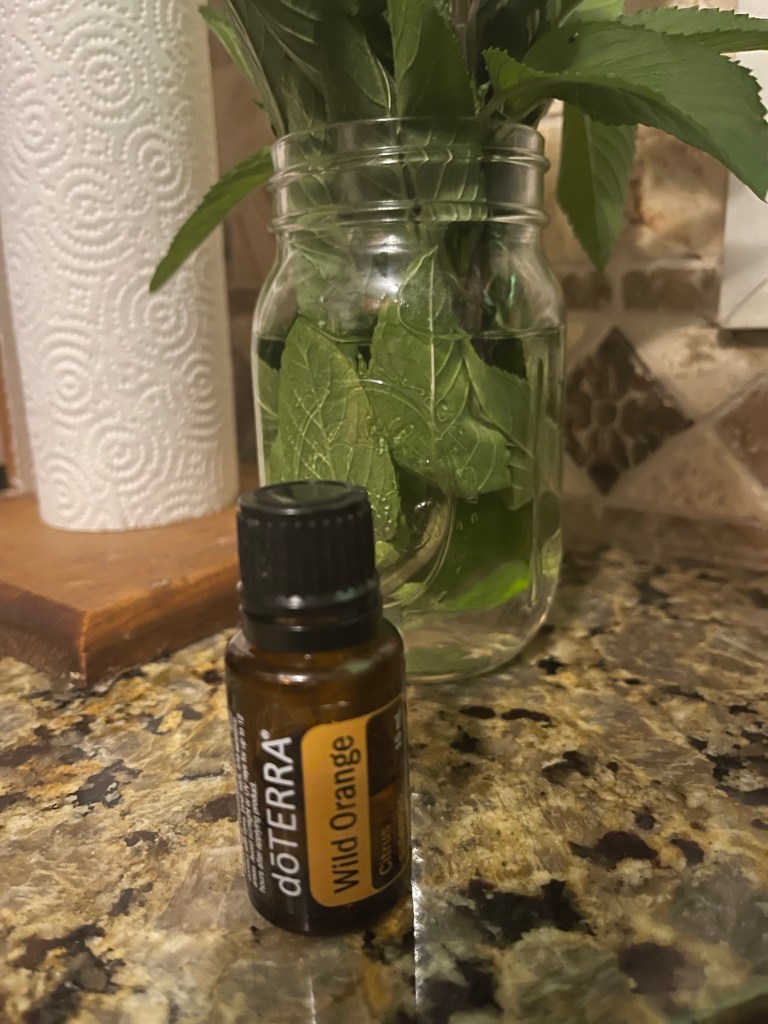
Fresh basil in the background and one of my favorite oils. Orange is very versatile.

The first question is the most common question. What inspired you to lead a holistic life? I always answer that question with a question. Why wouldn’t I? Then I begin to explain I chose this lifestyle for my health, my peace of mind, and simply put, for my life. I also add some details about the astounding amount of research revealing the high level of toxins, preservatives, and additives that basically poison the human body and our environment. These toxins are found in food, fast foods, shampoos, soaps, toothpaste, makeup, perfumes. detergents, cleaning products, air fresheners, candles, and even in our pet’s food. I’ll share another story in a different post of how we nearly lost my canine baby due to additives in what was supposed to be healthy doggie treats. That was a real eye-opener!

I always share one of the most informative books that I’ve ever read was, How Not to Die, written by Dr Gregor. There is so much information revealed within the covers of this book that confirmed my reasons for eating clean, and eating cleaner than I had been eating. His research also solidified my thoughts about why I had been food poisoned by fast food on more than one occasion, why we nearly lost our house dog, and why cleaning products and certain air fresheners lead to smothering and irritated sinuses. He exposes much about how these horrific toxins are actually allowed to be in our foods, pet foods, cleaning products, and even in medicines and vitamins that we think are helping us.

An eye-opening read!!! I encourage anyone who is interested in living a cleaner, more holistic life to read this book!

Secondly, I’m asked if it was a difficult transition. My answer is no. You don’t have to make the plunge and change everything at once. I made changes over a period time with my diet and I did the same thing with household items, hygiene items, and even my car air fresheners. I didn’t see the need to waste products that I already had on hand, so as I would empty an item, I would replace it with plant based, organic, and a cleaner item. First on the list, I would begin eliminating the toxins from my our home and our vehicles. My first elimination was laundry detergent. To prevent waste, after exhausting the last of my stock, I began using organic plant based detergents that didn’t require fabric softeners. There were some products that I had in my home that I could not convince myself to continue using. Those plug in air fresheners were tossed in the garbage, empty or not!

With the various air fresheners gone, I replaced them with diffusers for essential oils to help clean and purify the air and also bring a wide array of wonderful scents into the house. One by one I replaced our cleaning supplies with either organic plant based cleaning supplies or homemade supplies from natural ingredients. It’s quite amazing how many options are on the market and what’s even more amazing is the number of cleaners you can make using essential oils! I’ll share my bathroom cleaner soon! It cleans great, easy to make, and also prevents those toxic fumes that no one likes.

The next change was hair care products and tooth paste. doTERRA made that change easy for me as well. They have a wonderful plant based shampoo that incorporates essential oils, and a fantastic plant/based conditioner, and leave in conditioner that is excellent! I can’t even explain how wonderful my hair feels after using these products! My hair shines so much more than before and it feels less weighted. I also made the transition from usual tooth paste to a clean toxin free tooth paste from doTERRA. I chose this toothpaste simply because I’m a doTERRA consultant, and after trying it… it works! My teeth are clean and white and after reading the list of ingredients in my old toothpaste, it was an easy transition and one that I am happy I made.

doTERRA shampoo, conditioner, and leave-in conditioner. All natural!!!

Finally, vitamins was the next item to begin changing. It was easy to switch vitamins with doTERRA. The vegan vitality pack is on my monthly auto order. I love these vitamins as they’re all plant based, no additives, or artificial colors added, and they’re in veggie capsules. Essential oils, homegrown herbs, and homemade teas helps with common cold symptoms, allergies, scrapes and minor abrasions. I could go on forever with the reasons why I chose a holistic lifestyle.

Vitality pack! This was a game-changer! Even though I already took vitamins and had for years… I noticed an immediate change in my stamina!!

I’m asked if I miss fast foods, soft drinks, and what in the world do I do about coffee. Number one, I don’t miss fast foods. As a matter of fact, the cleaner you eat, the less you even want fast foods. My husband and I now prefer food prepared at home ten to one over restaurant foods. I gave soft drinks up over twenty years ago for my own personal health and have never looked back. I’ll be honest, coffee change took a while. It took a little while and a lot of different coffees to find a good organic coffee that I truly enjoyed, but have finally found one that is very satisfying. I have also replaced much of the coffee that I drank during the day and evenings with organic and my homemade teas.

Delicious organic coffee from Amazon!!!

Finally, I’m asked if I feel better physically since making so many changes. Simply omitting meats and dairy from my diet was a game changer with my cholesterol and inflammation. Omitting artificial colors, scents, and toxic preservatives really made a positive impact on my allergies. Plant based vitamins, a good clean diet, and the removal of toxic smells in our home has made a positive impact on my overall health, stamina, and lead to a much more simple life that makes me happy knowing I am doing something to improve my quality of life, my families, and decreasing the chances of disease in our bodies.

Enjoy the simple things that bring joy and support your health. Organic lavender growing near our front door! Love to add to plant butter, cookies, teas, and more.

If you’re interested in holistic living, start slow. Remove one thing at a time. Don’t try to do it all at one time! You’ll become overwhelmed, which might result in giving up. Make one change and allow that change to become a routine. Once you feel grounded and content with that change, make a second change. As you empty or exhaust a supply of one particular item, replace it with a cleaner wholesome item. Read the labels, do the research, do a little soul searching, meditate, pray, and take holistic living one day and one change at a time.

Take time to enjoy the change. One change at a time and you’ll be more likely to stay the course. It’s so worth it!

I hope you’ve enjoyed this post. Feel free to leave comments. I enjoy reading comments and answering questions. For now, God bless from the mountains of Kentucky! Happy Fall!!!

Five Organic Gardening Tips

Quote of the week:

Garden work is satisfying to the body and soul, as is the harvest.” ~Dr Bowling

Hello, from the mountains of Kentucky! I hope you’ve been blessed with awesome weather for your gardens! It’s been very dry in the mountains. Our garden is growing and we’re picking, but a lot of hard work has been involved with watering by hand through the month of June. Needless to say, we’ve decided to invest in ground soaking hoses that will water the ground when we want it, or as we need it. For a garden of our size, I’m not sure why we hadn’t already thought about this. I’m often asked questions about the difficulties involved with organic gardening. So, I decided to share five organic tips that can beneficial for your garden at this time of the year.

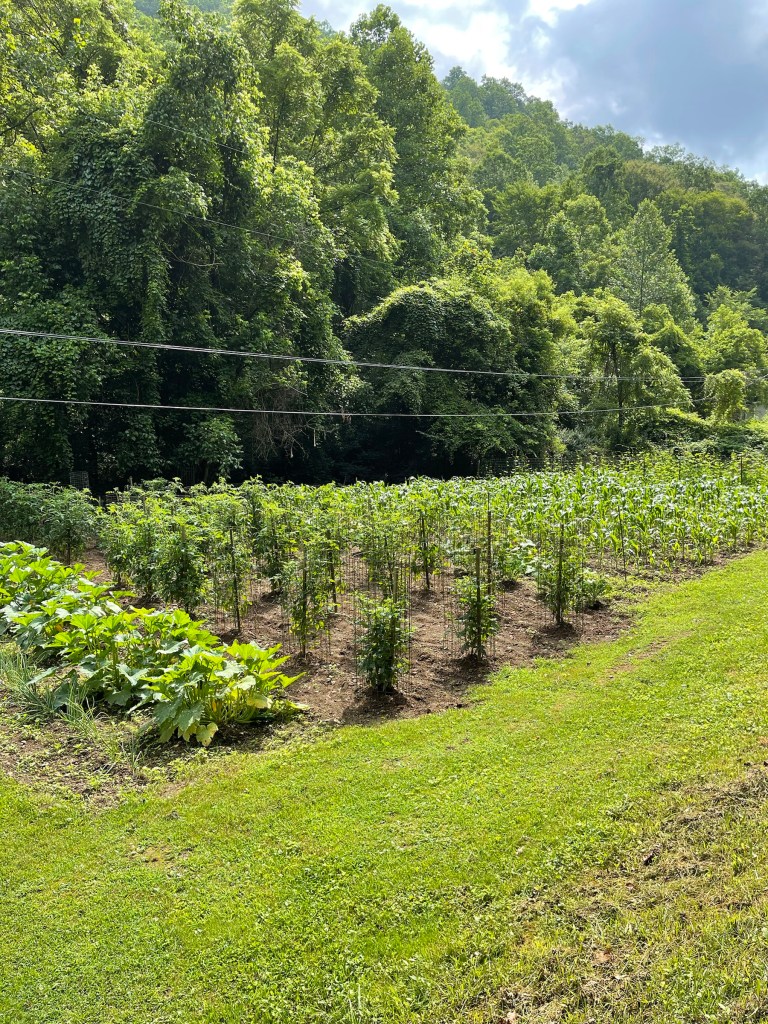
Love eating from the land… even though it’s a lot of hard work. Our garden early in the year!

Tip One: We’ve also dealt with low calcium in the soil through this very dry beginning to summer. So, through research and back work, we’ve added ground organic oyster shells to the soil around the squash and zucchini. As well as eggs shells and diatomaceous earth. Thankfully the rotting squash and zucchini have come to a stop and we’re back to picking our fill and then some of both fruits!

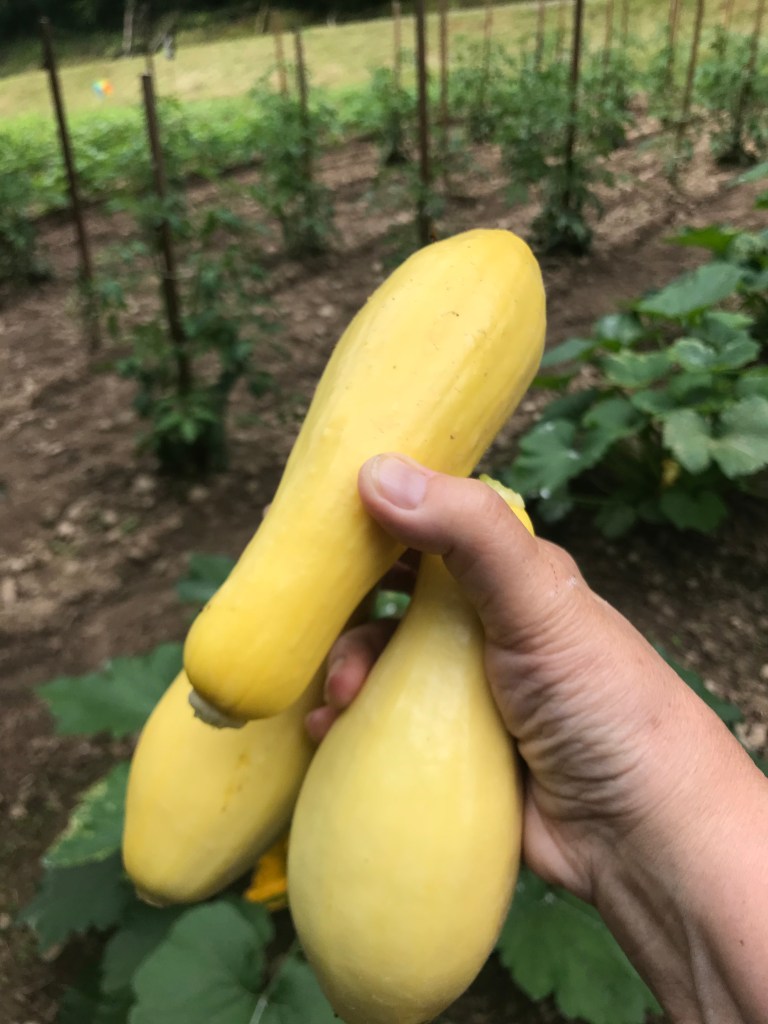
A few of the straight neck summer squash from our garden.

Tip Two: to add a little extra fertilizer to our herb garden, I’ve been saving organic tea bags and reboiling the bags for a weaker tea and watering the herbs. This is a game-changer for herbs. My favorites are chamomile, mint, and black tea. The plant feed on the rich antioxidants, and the the tea bags are added to the garden as the bags are biodegradable. We add the spicy cinnamon black tea bags around the garden for an additional deer repellent.

Nothing better than fresh herbs to cook with.

Tip Three: in the battle against those pesky beetles on beans, cucumbers, and squash plants. In a spray bottle we mix a spray of 10 drops of lavender essential oil, 10 drops of peppermint essential oil, and 10’drops of citronella essential oil, with a tsp of organic plant based dish detergent. Then fill the bottle with water. This makes a great spay to repel all kinds of munching little friends. We also dust our plants with organic food grade diatomaceous earth for an extra layer of protection.

Tip Four: adding a little potassium to tomatoes while repurposing banana peels. A lot of bananas are consumed at our house. I eat two a day most days. I love organic bananas for oatmeal, baked oatmeal, and as a snack and frozen ones in smoothies. So I’ve learned that not only roses like bananas, do do tomatoes in the form of a tea. To make tea, keep a pitcher of water in the fridge. The pitcher should be about half full to allow for room as you add banana peels. Once you’ve peeled the bananas, add them to the water. You can cut the peels, but don’t have to. There’s no need to cover the pitcher. After a week, take the bananas out and add one part banana tea to five parts water. Use this transit the base of tomatoes. It provides potassium to the soil. This will help produce stronger roots, stems, and great fruit. Banana tea can also be added beside of pepper plants as well.

Banana peel tea.

Tip Five: Begin saving egg shells a couple of weeks prior to planting tomatoes. When it’s time to plant, place an egg shell in the hole before putting the plant in the ground. Egg shells are loaded with calcium and will feed the soil at the roots of the tomatoes and help prevent blossom rot and what some of the old timers called, the blight.

I hope that you find these tips helpful and you have success with your garden this year and for years to come. Feel free to leave comments or ask questions. I love to hear from my readers. Well, it’s time to go pick a while and reap the joys of our labors. God bless from the mountains of Kentucky.

Harvesting Mint for Teas

Good Morning from the mountains of Kentucky. I hope your morning is off to a great start on this beautiful Saturday. We’ve been hammered with extreme temps this week, so today’s high seventies is a welcomed relief. It’s that time of year when the garden needs to be hoed, the weeds need to be pulled, herbs are coming in like crazy, and the harvesting and drying have begun. I took advantage of the cooler temps this morning to prune my herb garden, which desperately needed a trim. I like to trim my herbs in the early morning hours while the dew is still on the ground, and clinging to the leaves. I also like the cool temperatures as it is easier on me and on the herbs.
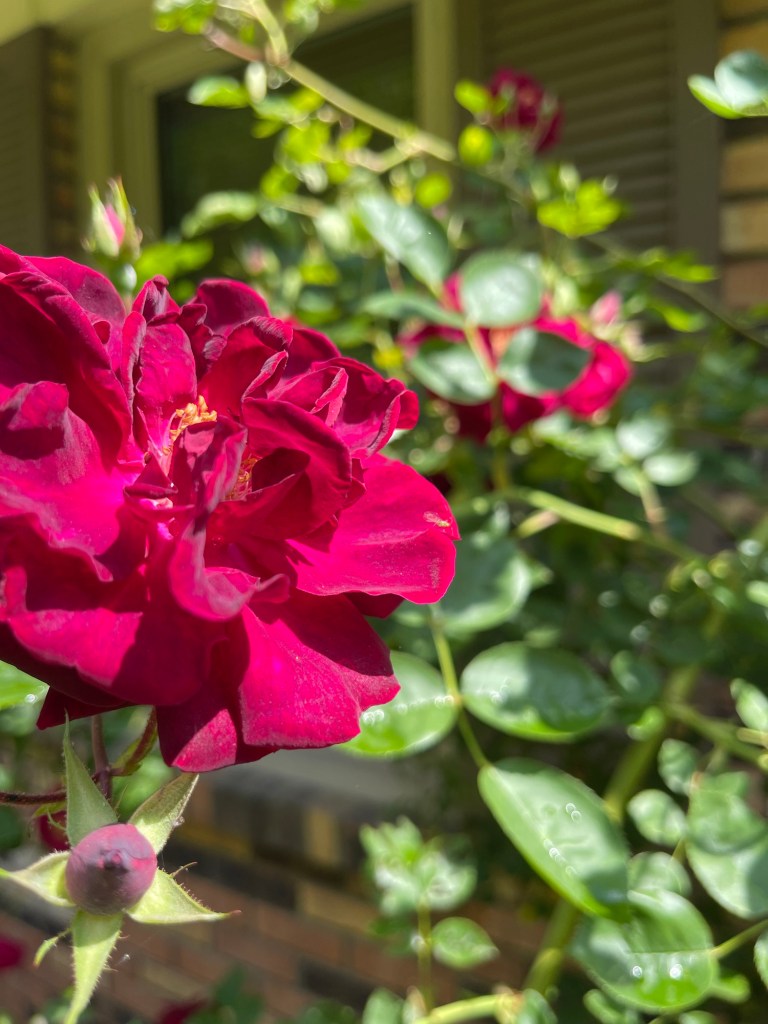
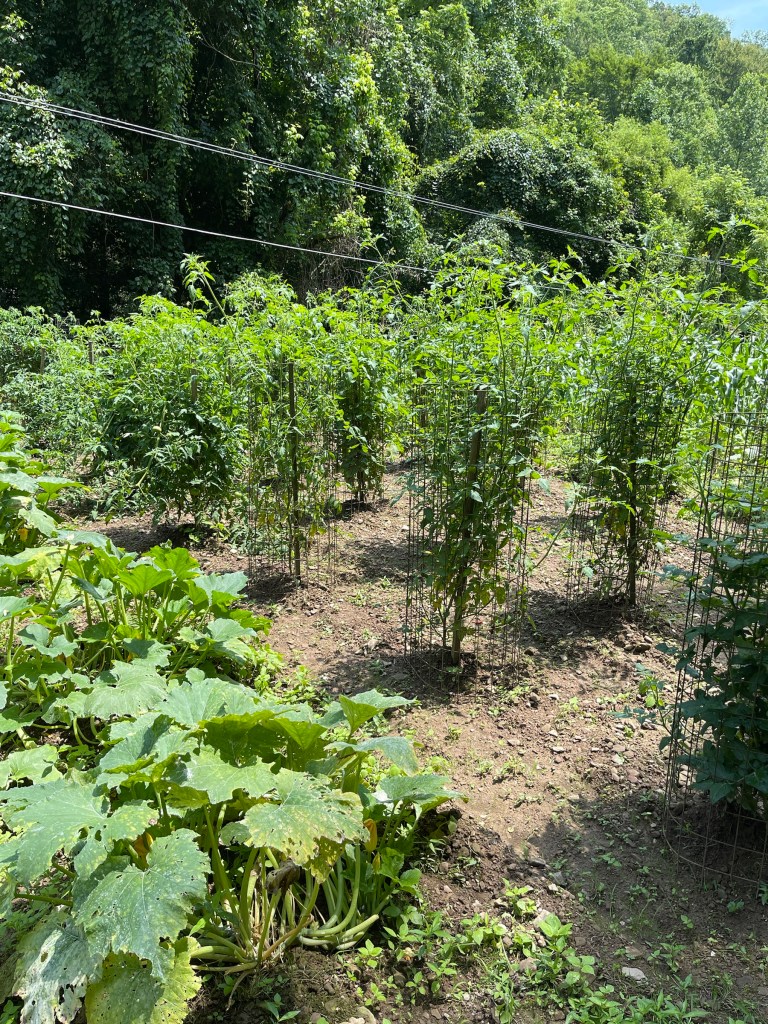
This is about a fourth of our vegetable garden.
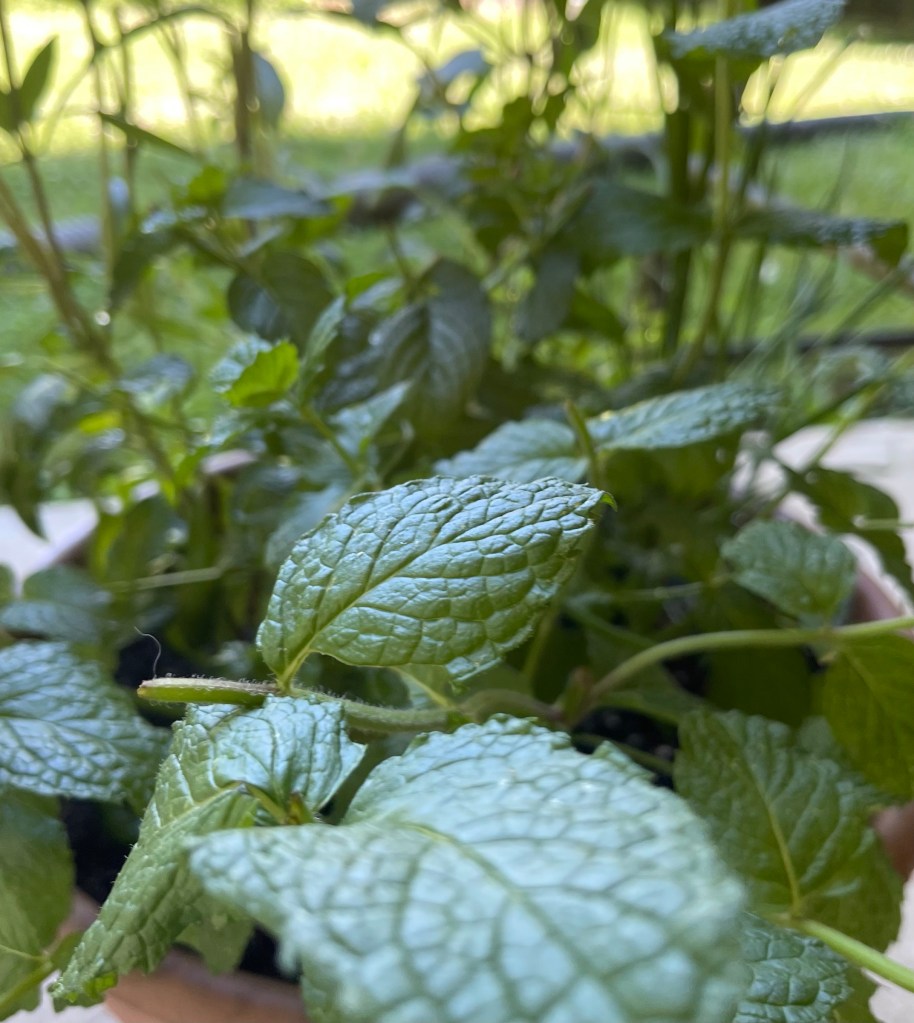
Spearmint for teas and salads.

I have been enjoying mint-infused water this summer, and quite a bit of mint tea. I have already dried two cuttings of various types of mint, as well as other herbs. They’re carefully tucked away in my kitchen herb cabinet in glass jars in the kitchen. Glass jars with air-tight lids are the best method of storing dried herbs. I have had several questions about how I harvest mint. It’s actually quite easy. As I mentioned above, I trim herbs before they become leggy. Trimming herbs actually causes the herbs to take on a more bushy consistency.

Lemon balm for cooking, teas, and health.

As I trim the mint, I place the fresh-cut mint on large cookie sheets lined with a white paper towel or butcher paper. This allows me to keep the mints separated and labeled if necessary. I rinse the mint to ensure there are no ticks or other small pests. While the mint is draining in the sink, I inspect the mint for the best leaves. I try to pick the mint that is void of holes where insects may have nibbled, dark spots, or any other imperfections. I gently pat the leaves dry and place them on a clean, lined cookie sheet and place them where they are not in direct sunlight. It doesn’t take as long for the herbs to dry with this method.

Chocolate mint tea drying in the kitchen.

A second method I use is to follow the above steps, except do not remove leaves from stems. I pat the stems of aromatic leaves dry, gather the mint into a bunch, and wind cotton twine around the stems to tie the mint in a bunch to hang dry. I hang the mint in an area that is not directly exposed to windows or sunlight. It takes a little longer for the mint to dry by this method, but it allows you to harvest the stems as well as the leaves, while also filling the kitchen with a nice fresh mint aroma.

Once the mint in the tray is dry, you may either crumble the mint and add the mint to the mint jar or simply store the leaves in the jar. I use both methods. I like the crushed mint for baking and the whole leaves for tea. You may use either method of storing the dried bundle.

Chocolate mint leaves drying for tea.

A second question that is often asked is; what type of mint do you grow? To answer that, I respond as much as possible. Then I elaborate and explain that I grow peppermint, spearmint, chocolate mint, apple mint, lemon mint, and strawberry mint. I always reply that spearmint and chocolate mint are my favorites.

Finally, the third most asked question is; how do you make your tea? I tell them that I enjoy iced teas and also hot teas, depending on my mood and seasonal temperature at the time. For hot teas, I will typically place an organic black tea bag in my cup, put the water on to boil, choose the flavor of mint I want to have in my tea, and then add the mint to my tea ball. Once the water has reached the right temperature, I pour the water into the cup and allow the black tea and mint in the tea ball to steep for three to four minutes. I add a tiny bit of organic agave to the tea, stir and enjoy. You may add milk if you like your tea milky. I occasionally add almond milk or oat milk to mine.

Small jar of dried chocolate mint.

For cold tea, I boil enough water for a quart jar. I add two black tea bags, and if you like green tea, you can add green tea bags instead of black. I also add a larger tea ball filled with my choice of dried mint or even a mix of mints. Allow the tea bags and the tea ball to steep for forty-five minutes to an hour in the glass quart jar. Stir occasionally, and once the tea has darkened and cooled, you can pour tea over ice and add a little lemon, agave, and fresh mint leaves. This is an awesome drink, that is refreshing, full of antioxidants, and tastes great!

Tips of the week: you can pot various types of mint in flower pots to prevent the mint from taking over your garden, or if you have the room, you can isolate each type of mint in separate herb beds. Mint has a way of being intrusive and will quickly take over and can smother other herbs out. I like to do both pots and beds. My second tip is; as you know, I am a doTERRA essential oil consultant and recently I discovered that one drop of peppermint essential oil takes my peppermint tea to a totally new level. One drop of spearmint essential oil can be added to spearmint tea as well. Do not add essential oils from typical over-the-counter, or aromatherapy blends. doTERRA oils that are identified as supplemental can be added for internal use and wonderful internal benefits.

Lavender awaiting plant butter, teas, or cookies.

I hope that you’ve enjoyed learning about how I harvest mints for teas. I encourage you to grow mint, as it is probably the easiest herb to grow. It is also a very versatile herb that can be used for bee stings, headaches, bruising, as a natural pesticide, and also baking and delicious teas. Comments, ideas, and questions are welcomed. For now, God bless, from the mountains of Kentucky. Remember, God has given us an abundant supply of plants that will help sustain us.
Taking Flavor and Holistic living to a Higher Level

Hello, from the mountains of Kentucky! I hope you had an adventurous and restful weekend and that your week is off to a great start. Saturday morning’s is typically time for me to catch up on housework, laundry, and also time to work in my herb garden. But, sometimes the craving for an adventure stirs within me. I love a good adventure as much as the next person! I tell my grandchildren that adventure is in the eye of the beholder and that adventures are everywhere. The mountains of Kentucky are are the perfect place for adventures. Saturday’s are typically a time of catching up on work around the house, last Saturday I felt the craving for an adventure. So, we decided to trail ride in our side by side with our family. We set off for the mountain trails to enjoy the view, recall stories, and enjoy quality family time. Who knew what kind of adventure awaited us! Remember, adventure is in the eye of the beholder! I have always loved the mountains of Kentucky. They provided countless hours of playtime for us when we were growing up. We would build forts, hike, picnic, pretend to be cowboys and Indians, and rugged pioneers surviving the elements. Sometimes, we just enjoyed sitting beneath the trees and cloud watching. Nevertheless, the mountains have always called my name.
Large rocks at the top of the mountain known as the Rat Rocks.

When we were growing up in the hills of Kentucky, we spent hours hiking to the top of the mountains behind our grandparents house. We’d walk until we arrived at the large rocks. Many days were spent enjoying a simple picnic on top of the rocks that pictured above. While we ate we would often retell the story of the man that froze to death one night when a sudden snow storm came while he was traveling. His vision was blurred by the heavy snow and he lost his way. Legend has it that the man sought shelter from the storm near one of the large rock formations. Days passed before he was found in the mountains where he had frozen to death. I’m not sure that we ever grew tired of telling stories, finding arrow heads, pretending to be pioneers, or just waking and enjoying the bounties of nature. We also loved the simple days and afternoons of sitting outside on the porch and listening to our grandparents and relatives tell the mountain stories time and time again. I miss those days and think of them often. So, enough about mountain legends! I have a new recipe that I’m super excited to share with you!
I have always loved growing, drying, and cooking with herbs. I love their smell, their health benefits, and their taste. I also love to make teas from my herbs, which is loaded with health benefits. I also love essential oils. Together they make a wonderful partnership! Recently I decided to become a doTERRA essential oil advocate. It only made sense to me since I have enjoyed diffusing the oils and using them for various other purposes for many years. Essential oils and herbs go hand in hand and are both all natural and healthy. I like to refer to them as God’s blessings. I recently learned that some of the doTERRA oils also offer even more health benefits than topical and diffusion benefits. I learned about their internal health benefits, and also that many of them can be used to flavor some of our favorite dishes. This all intrigued me as I have enjoyed a more holistic way of life with plant-based cleaning products, laundry detergent, and through following a plant-based diet for nearly four years. I edged my way forward from clean eating, to vegetarian, and from vegetarian, to vegan. The rewards and health benefits of a holistic lifestyle are amazing! So discovering even more natural health benefits of essential oils… I was all in!

Enjoying the benefits of diffusing essential oils.

Some of you may have tried the wild orange orange essential oil. It is one of my favorite oils to diffuse in the house late evenings. It smells amazing and provides a calming and relaxing atmosphere. Wild orange is also one of the many oils that can be used in sauces, teas, smoothies, and it’s also great in homemade cleaning products. A couple of drops of wild orange on wool dryer balls provides an amazing fresh scent in your laundry as it is drying. Also, two drops in a chocolate smoothie tastes absolutely amazing! After I discovered this delicious taste, I decided to add a couple of drops to my vegan chocolate protein balls. Can I say, SCORE!!! I am so anxious for you to try this recipe. If you love those cream filled bites of chocolate goodness in flavored assorted chocolates, I think you’ll love these protein balls. However, unlike chocolate candies, protein balls are healthy, vegan, and delicious!

One of my favorites oils!

Ingredients:

• 2 scoops of chocolate plant-based chocolate protein powder (I prefer orgain)

• 1 tbs of good natural smooth organic peanut butter

• 1 tsp cinnamon

• 1 tbs finely chopped walnuts

• 1/2 cup old fashioned oats (can be ground for a finer texture, but doesn’t have to be)

• 1 tsp organic ground flax seed.

• 1 tsp of organic chia seeds. (I measure with the small scoop that came with the chia seeds.)

• 1 tbs of organic agave

• 1 tbs of vegan chocolate chips

• 4 drops of doTERRA wild orange essential oil. (aromatherapy grade oils are not suggested for internal use)

Process:

Mix dry ingredients and add moist ingredients to the mixture. Mixture will be stiff, but keep working it. You may add a tsp of agave if needed to make the mixture easier to work up. Once mixture is mixed, use a small scoop or spoon and dip the desired amount into your hands. Roll the mixture into a ball and place in a dish. Continue working the mixture up until all of the mix has been used. I typically have 12–14 protein balls. Refrigerate for two hours to allow balls to set.

You can experiment and try different toppings or coatings. You may add ground coconut to the balls for an additional burst of flavor. I like them either way! I have also tried them with dates instead of peanut butter, which are delicious too, but I’m a peanut butter-aholic, plus the peanut butter gives them a bit of candy bar taste!

Store the balls in a covered container and keep refrigerated for best texture. They will last for days and days in the fridge, if you can resist eating them in larger quantities. I try to limit myself to two per day.

I rolled this batch in fine unsweetened shredded coconut for an added flavor! Yum!!!

I hope you enjoy them as much as I do. My grandkids love them too. They think they taste like brownies. I love that they enjoy them because this allows them to avoid added sugars and butter, which are both ingredients to traditional candies, cookies, and brownies. Feel free to leave a comment. I love hearing from my readers. If you’re interested in doTERRA oils, leave a comment with your email and I’ll be happy to send you a direct link so you can explore and begin enjoying the many benefits essential oils provide. For now, I’m off to care for my herbs before the rain comes today. From the mountains of Kentucky , God bless each of you.