Good afternoon from the mountains of Kentucky! Today feels like spring in the mountains. Easter Lillie’s are bloomed, some of the trees and bushes are budding, and I see green plants emerging through the flower bed covering. I am excited about spring as it always feels like an opportunity for new beginnings, time to plant, and time to enjoy the beautiful mountains that we are blessed with.
Summer in the mountains!
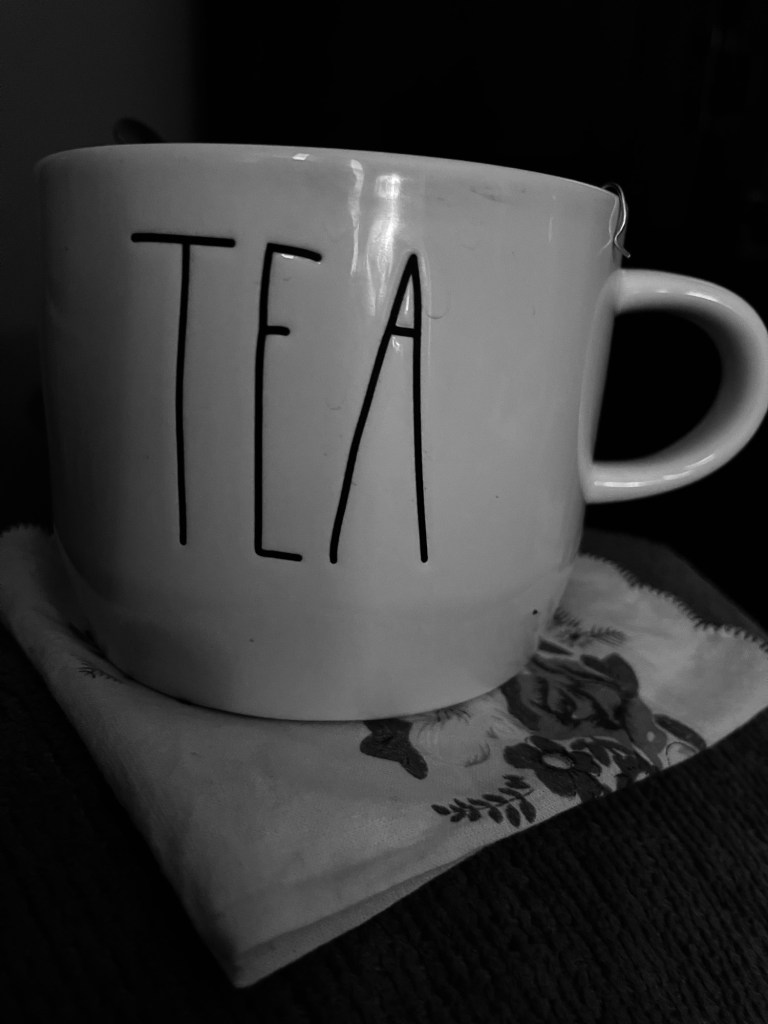
For those of you who are serious tea drinkers, and for those who enjoy a cup of tea from time time… you’ll enjoy my series, Tea Time Tuesday. It will be a reoccurring blog post that will include random topics ranging from making teas, uses of teas, to recipes that include tea in them, and occasional recipes for goodies to eat while drinking tea. I will also review books I’ve read while enjoying a cup of tea. While some posts might be simple ramblings or inspirational words. However, today’s post is about a topic that is worthy of conversation. Loose tea verses tea bags.
I’ve been an avid tea drinker for years. I like almost all flavors of teas. But, I do have a few favorites. I love a good chai tea with oat milk, and lavender. I drink peppermint tea almost every day. I like black teas and love a good chamomile tea with either honey or lavender and sometimes both. Regardless the tea I drink, I prefer loose leaf to tea bags. The tea that I grow and dry does not even compare to purchased teas, but there are times when I buy loose leaf, especially black tea and chamomile tea. So, why do I prefer loose leaf to bagged tea? Loose leaf is more flavorful, I don’t have to worry about how long it’s been shelved, I don’t have to wonder if the bags are good quality or could they be toxic. There are so many different reasons, but flavor and the ability to use a tea ball of loose leaf tea a second time, which is a great money and tea saver, especially if you purchase tea. If you don’t like a tea ball, you can always purchase organic tea bags that you can fill yourself. The organic tea bags are great for tea on the go. They store easily in my lunch bag that I carry to work.
I’m curious about your preferences. Which do you prefer bagged tea or loose leaf, and why? I would love to hear from you. For now, God bless from the mountains of Kentucky. I think I’ll enjoy a cup of tea and porch sit a little while on this beautiful spring-like day!
Good Morning from the mountains of Kentucky. I hope your morning is off to a great start on this beautiful Saturday. We’ve been hammered with extreme temps this week, so today’s high seventies is a welcomed relief. It’s that time of year when the garden needs to be hoed, the weeds need to be pulled, herbs are coming in like crazy, and the harvesting and drying have begun. I took advantage of the cooler temps this morning to prune my herb garden, which desperately needed a trim. I like to trim my herbs in the early morning hours while the dew is still on the ground, and clinging to the leaves. I also like the cool temperatures as it is easier on me and on the herbs.
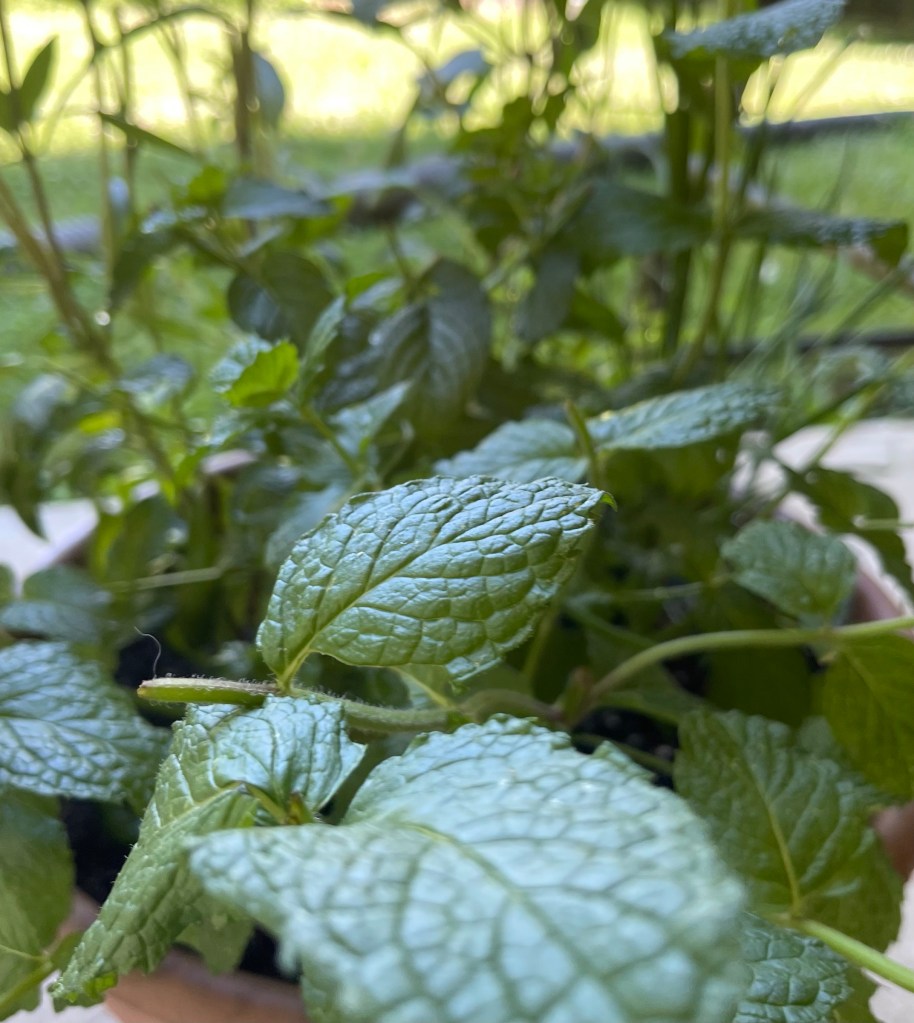
This is about a fourth of our vegetable garden. Spearmint for teas and salads.
I have been enjoying mint-infused water this summer, and quite a bit of mint tea. I have already dried two cuttings of various types of mint, as well as other herbs. They’re carefully tucked away in my kitchen herb cabinet in glass jars in the kitchen. Glass jars with air-tight lids are the best method of storing dried herbs. I have had several questions about how I harvest mint. It’s actually quite easy. As I mentioned above, I trim herbs before they become leggy. Trimming herbs actually causes the herbs to take on a more bushy consistency.
Lemon balm for cooking, teas, and health.
As I trim the mint, I place the fresh-cut mint on large cookie sheets lined with a white paper towel or butcher paper. This allows me to keep the mints separated and labeled if necessary. I rinse the mint to ensure there are no ticks or other small pests. While the mint is draining in the sink, I inspect the mint for the best leaves. I try to pick the mint that is void of holes where insects may have nibbled, dark spots, or any other imperfections. I gently pat the leaves dry and place them on a clean, lined cookie sheet and place them where they are not in direct sunlight. It doesn’t take as long for the herbs to dry with this method.
Chocolate mint tea drying in the kitchen.
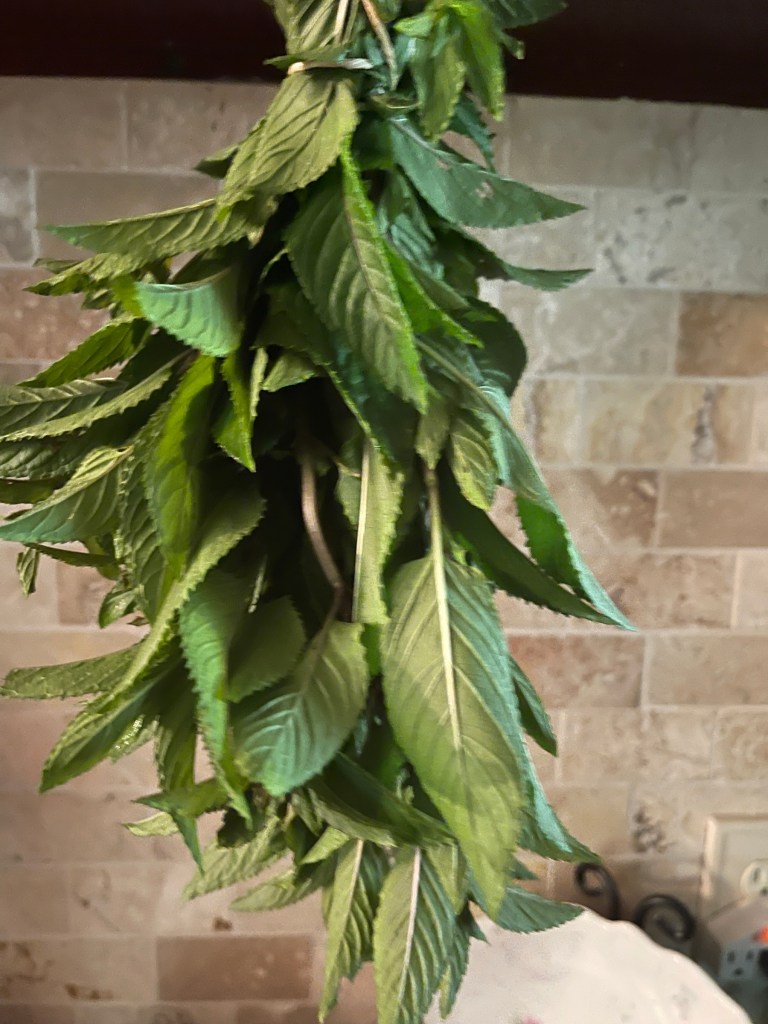
A second method I use is to follow the above steps, except do not remove leaves from stems. I pat the stems of aromatic leaves dry, gather the mint into a bunch, and wind cotton twine around the stems to tie the mint in a bunch to hang dry. I hang the mint in an area that is not directly exposed to windows or sunlight. It takes a little longer for the mint to dry by this method, but it allows you to harvest the stems as well as the leaves, while also filling the kitchen with a nice fresh mint aroma.
Once the mint in the tray is dry, you may either crumble the mint and add the mint to the mint jar or simply store the leaves in the jar. I use both methods. I like the crushed mint for baking and the whole leaves for tea. You may use either method of storing the dried bundle.
Chocolate mint leaves drying for tea.
A second question that is often asked is; what type of mint do you grow? To answer that, I respond as much as possible. Then I elaborate and explain that I grow peppermint, spearmint, chocolate mint, apple mint, lemon mint, and strawberry mint. I always reply that spearmint and chocolate mint are my favorites.
Finally, the third most asked question is; how do you make your tea? I tell them that I enjoy iced teas and also hot teas, depending on my mood and seasonal temperature at the time. For hot teas, I will typically place an organic black tea bag in my cup, put the water on to boil, choose the flavor of mint I want to have in my tea, and then add the mint to my tea ball. Once the water has reached the right temperature, I pour the water into the cup and allow the black tea and mint in the tea ball to steep for three to four minutes. I add a tiny bit of organic agave to the tea, stir and enjoy. You may add milk if you like your tea milky. I occasionally add almond milk or oat milk to mine.
Small jar of dried chocolate mint.
For cold tea, I boil enough water for a quart jar. I add two black tea bags, and if you like green tea, you can add green tea bags instead of black. I also add a larger tea ball filled with my choice of dried mint or even a mix of mints. Allow the tea bags and the tea ball to steep for forty-five minutes to an hour in the glass quart jar. Stir occasionally, and once the tea has darkened and cooled, you can pour tea over ice and add a little lemon, agave, and fresh mint leaves. This is an awesome drink, that is refreshing, full of antioxidants, and tastes great!
Tips of the week: you can pot various types of mint in flower pots to prevent the mint from taking over your garden, or if you have the room, you can isolate each type of mint in separate herb beds. Mint has a way of being intrusive and will quickly take over and can smother other herbs out. I like to do both pots and beds. My second tip is; as you know, I am a doTERRA essential oil consultant and recently I discovered that one drop of peppermint essential oil takes my peppermint tea to a totally new level. One drop of spearmint essential oil can be added to spearmint tea as well. Do not add essential oils from typical over-the-counter, or aromatherapy blends. doTERRA oils that are identified as supplemental can be added for internal use and wonderful internal benefits.
Lavender awaiting plant butter, teas, or cookies.
I hope that you’ve enjoyed learning about how I harvest mints for teas. I encourage you to grow mint, as it is probably the easiest herb to grow. It is also a very versatile herb that can be used for bee stings, headaches, bruising, as a natural pesticide, and also baking and delicious teas. Comments, ideas, and questions are welcomed. For now, God bless, from the mountains of Kentucky. Remember, God has given us an abundant supply of plants that will help sustain us.





 A Healthier Me...Homesteading Simple & Clean