
Hello from the mountains of Kentucky! I am excited to share another of my favorite herbs with you. In this post I’ll share my thoughts and ideas about oregano as well as some of my favorite uses, how I dry it for spices, use it as a natural antibiotic, and more. So, let’s get started.
Oregano is member of the mint family. Oregano is perennial that is typically hardy in warmer zones. It prefers relatively hot dry climate. It grows well in beds and pots. However, to ensure it returns in the spring, it should be planted in the ground. It is best to plant oregano in the spring, but it can be planted later in the season. There are several types of oregano including Spanish, Turkish, and Greek, which is the most common and my preferred.
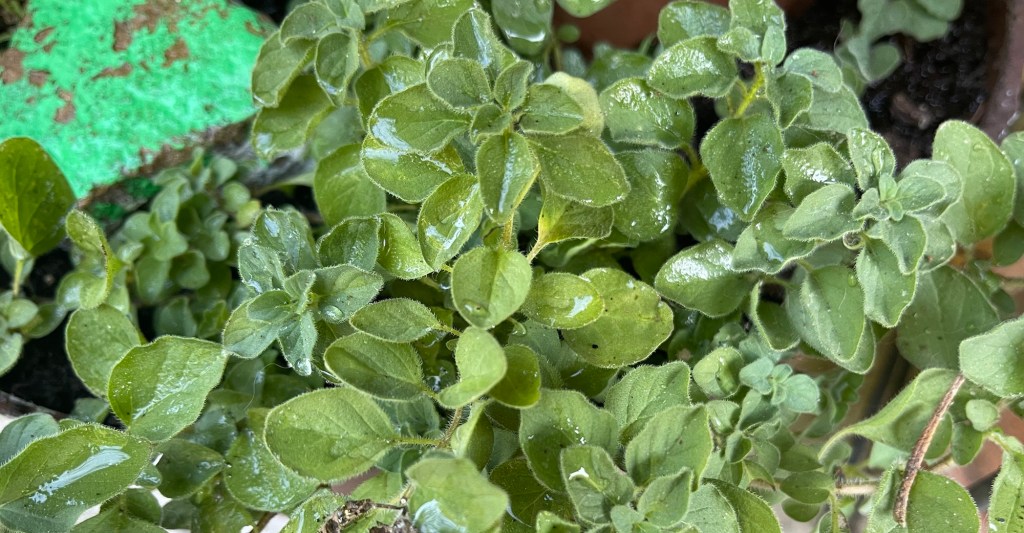
Oregano grows well in a sunny area in well-drained soil. I water oregano that I have planted in pots daily, primarily because it is planted in terracotta pots, which drains and dries out easily. I water the oregano in the herb garden every other day, or as needed. I watered it daily during this 92-94 temperatures we’ve been having lately. I like to fertilize my herbs with banana water or a weak tea mixture at least once a week. Banana water is simply water that I soak organic banana peels in over night. This process adds potassium to the soil. The weak tea is made from leftover organic tea bags or leaves infused in a gallon of water. This type of natural fertilizer adds antioxidants to the soil and plants much like tea provides for our bodies.

Oregano is typically thought of as an Italian spice, but it is also a great spice for eggs, tofu scrambles, and it makes a nice addition of flavor to soups, baked potatoes and of course spaghetti, and lasagna. I like my dried oregano use in my homemade spinach tortillas. I have included the link for Vegan Italian Spinach Wraps These delicious wraps take a small amount of time to prepare, they’re easy to make, and they’re healthy. They make a great snack as well as a tasty wrap.
I typically use the oregano plants that I grow in pots for cooking and the oregano in the garden for medicinal purposes, and for harvesting to dry for spices. Pruning the oregano creates a fuller mor bushy plant. I trim and prune it as needed throughout the summer. I like to clip stems to use fresh when I am cooking. When I am ready to harvest, I cut the oregano in the early to mid morning hours before the sun hits the herbs. I clean the herbs by giving them a gentle rinse and patting them dry. A salad spinner can be used to remove any additional moisture. I like to hang bundles of the cut oregano stems beneath the upper kitchen cabinets to dry. Make sure the herbs are completely dry before bundling to prevent mold from forming in the middle of the bundle.
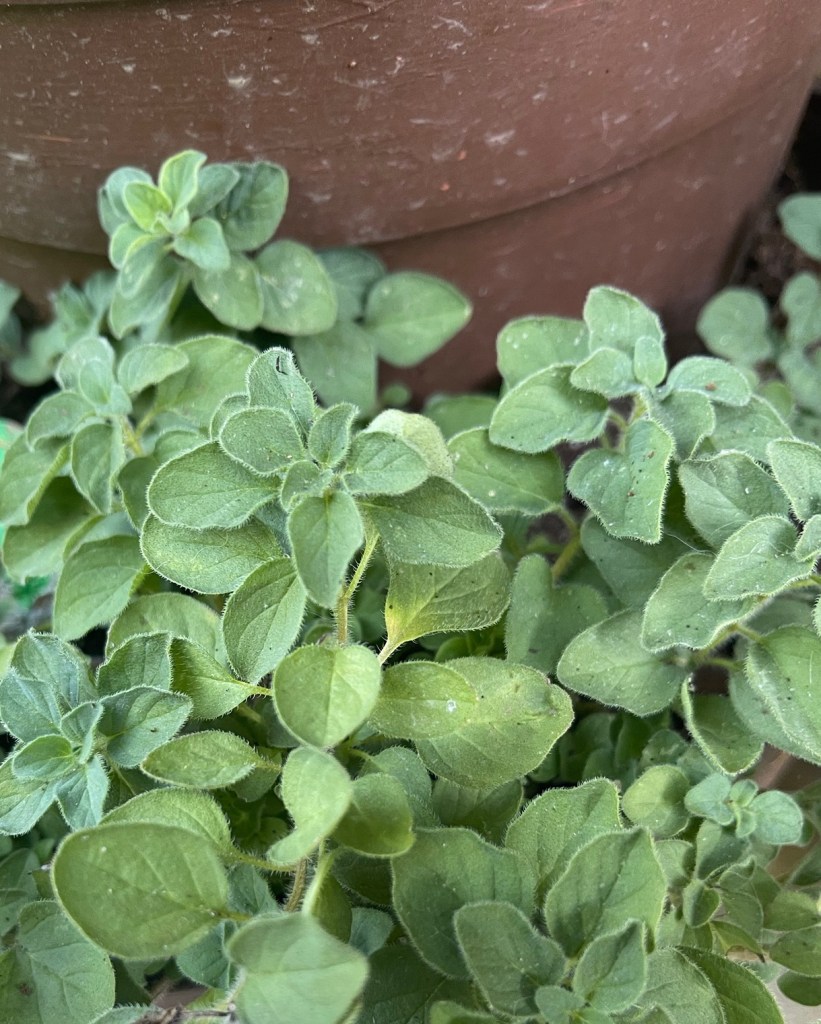
I love the aroma that fills the house while it’s drying. When I have a larger harvest, I dry it by adding the cut herbs to the drying rack. Keep the herbs away from direct sunlight when drying. Allow the oregano to air dry until it becomes crunchy. Once the herbs are dry, I like to run them through the spice grinder a few times to create a nice spice to cook with. I also rough grind some of the dried oregano for a more textured spice. I store the herbs in a glass container with a lid and keep them in a cabinet away from direct sunlight. Herbs can be dried in the oven or in a dehydrator. However, air drying is my preferred method. I feel that the herbs are more potent when air dried.
I also like to infuse dried oregano in organic extra virgin olive oil and use it as a rub for aching joints, to sooth minor cuts, and bruises. Many have used oregano oil for centuries as an antibiotic by taking one to two drops of oil daily. To make an internal oil, add dried oregano to oil and place in a dark area for four to six weeks. Next, strain the oil into a small glass bottle with a dropper. Keep the oil stored in a dry and dark area. I typically keep my bottoms of oil in an apothecary chest for easy access and better organization. Oregano oil has been used for parasite infections, digestion, and others have used it for coughs and congestion. However, there is not medical/scientific evidence of the medicinal benefits of oregano oil.

I prefer to use dried oregano in oil in what is called a cold infusion. This type of infusion has been used for centuries. It is less likely to become rancid or gather mold than fresh herbs will. To make an infusion, fill half of a clean glass jar with dried oregano leaves and the remainder of the jar with a good quality organic olive oil. Label and date your jar so you will recognize it with ease. Seal the jar and set aside away from direct sunlight. I typically store my infused jars of oil in the pantry. Allow the oil to infuse the oregano for at least four weeks. The oil maintains its potency better in a cool dry place. I like to add some of the oil in a small glass dropper bottle for internal use. The shelf-life infused oils is typically two years, if the oil is stored correctly. I recently read where some people add a drop of organic vitamin E oil to their infused oil to help increase the shelf life. I personally have not tried this. doTERRA oregano oil is an essential in my medicine cabinet as well. Essential oil is different than infused oil. It is more concentrated and potent. I would love to make essential oils, but the equipment to extract the oils is a bit too pricy for me. So, I buy top-grade essential oils from doTERRA. If you are interested in ordering, selling, or becoming a member of doTerra, simply follow the link https://referral.doterra.me/12640050
I find it interesting that oregano is one of the herbs that many herbalists keep in their survival kit, take camping, and have conveniently located in their medicine cabinets, as well as their spice racks. It’s a great addition of flavor to many dishes, breads, and soups, and a natural healing herb that is very versatile. It is easy to grow, maintain, harvest, and easy to create spices, teas, and oils. I am anxious to hear how you incorporate the pungent beautiful herb of oregano in your daily life.
Head over to the Apple podcast, and search for, Homesteading in the Mountains, to listen my latest episode about oregano.
Feel free to comment, like, and or follow my blog for more posts about how I incorporate herbs, essential oil, plant-based recipes, and homesteading in the mountains. Be sure to check back soon, as I will be posting my new zucchini fritter recipe. It’s a new favorite in our family. God bless from the mountains of Kentucky.
Discover more from A Healthier Me...Homesteading Simple & Clean
Subscribe to get the latest posts sent to your email.
 A Healthier Me...Homesteading Simple & Clean
Pingback: A walk in the Herb Garden | A Healthier Me...Homesteading Simple & Clean